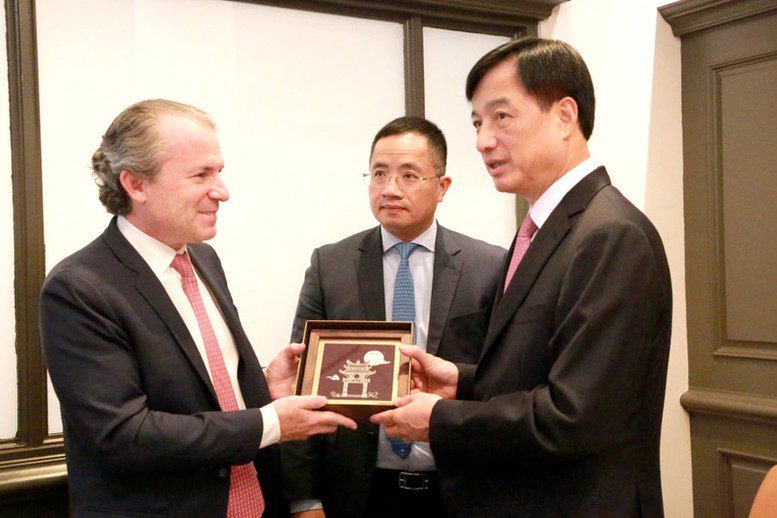
Meeting Mr Daniel Rosen, CEO of Rosen Partners, Secretary of the Hanoi Party Committee Nguyen Duy Ngoc acknowledged and highly appreciated the group’s intention to invest in the city, expecting the project to bring large foreign direct investment (FDI) and advanced management and operating technology in tourism and entertainment.
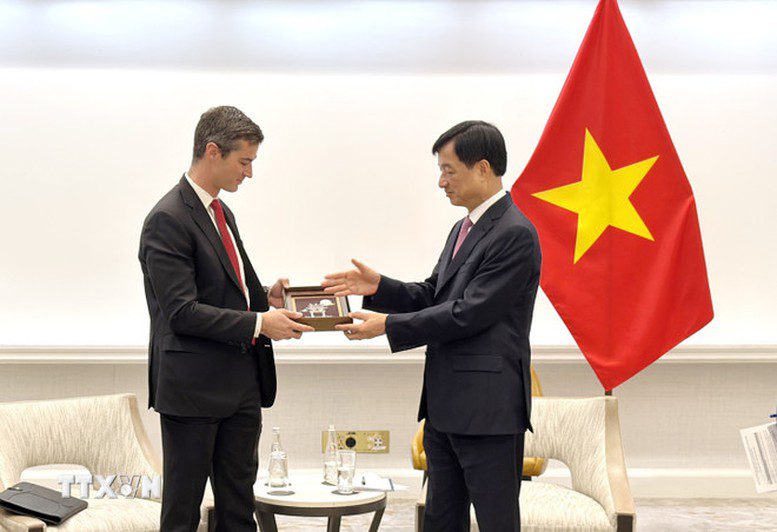
Mr Nguyen Duy Ngoc said Viet Nam had just successfully held the Party’s 14th National Congress, which elected To Lam as General Secretary. The Congress set out Viet Nam’s development path towards the 100th anniversaries of the Party’s founding and of the nation’s founding, as well as a socio-economic development path targeting double-digit growth, with science, technology and innovation as the driving force.
Viet Nam’s Resolution 57-NQ/TW sets out venture capital policies, including some pilot investment projects. Viet Nam also has hi-tech parks in Hanoi, Ho Chi Minh City and neighbouring provinces to receive high-tech investment projects meeting modern requirements such as artificial intelligence (AI) and semiconductors.
In 2025, Hanoi’s GRDP grew by 8.16% and its budget revenue accounted for about 25% (one quarter) of the national total. Hanoi aims for 11% growth from 2026. To achieve this, Hanoi has identified 3 groups of issues: a Capital master plan with a 100-year vision; multi-tier, multi-layer, multi-centre development; and connecting surrounding provinces as satellites. Hanoi has also proposed building institutions to benefit from outstanding policies.
Hanoi is developing a master plan with a 100-year vision, aiming to become a “Cultured – Distinctive – Creative”, green, smart and globally connected megacity, and targeting continuous double-digit growth for 20 years (2026-2045).
This goal requires a new growth model based on knowledge, science and technology, innovation, digital transformation and high-quality human resources, as well as very large social investment.
Hanoi therefore welcomes US companies and corporations to invest and do business in Hanoi, especially in financial investment, urban infrastructure, strategic technologies, telecommunications, energy, healthcare, education and high-quality tourism.
Secretary Nguyen Duy Ngoc said that, given Rosen Partners’ potential and strengths and the scope for cooperation with Hanoi, he proposed that the group expand beyond real estate and tourism into fields Hanoi is prioritising under its 100-year vision. On research and development, he also proposed that Rosen Partners consider building research centres in Hanoi (preferably at Hoa Lac Hi-Tech Park).
The Secretary of the Hanoi Party Committee affirmed that the city is finalising outstanding institutions, open market access and a competitive investment and business environment, a green lane mechanism, low transaction costs and international best practices, with clean land available for large strategic partners such as Rosen Partners.
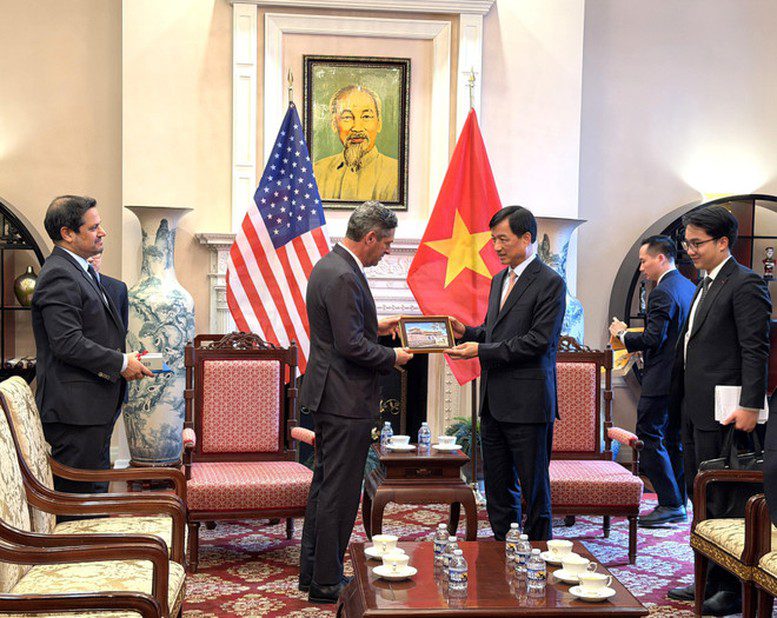
At the meeting with Arizona State University (ASU), Mr Nguyen Duy Ngoc welcomed Kevin McGinni, Vice President for Strategic Technology Initiatives, and ASU members, and highly appreciated ASU’s interest, support and partnership with Viet Nam in education and training of high-quality human resources, science, technology, innovation and the semiconductor industry.
Introducing Viet Nam’s Resolution 57-NQ/TW to ASU members, he stated that Viet Nam regards the development of science, technology, innovation and digital transformation as the most important breakthrough and the main driver for rapidly developing modern productive forces, renewing national governance and raising the productivity, quality and competitiveness of the economy.
On proposed areas of cooperation, Mr Nguyen Duy Ngoc highly appreciated the results achieved with ASU after the workshop “Shaping the future of the semiconductor industry” held in January 2026.
He proposed that ASU study the possibility of signing cooperation agreements with several major cities in Viet Nam to boost the semiconductor industry, focusing on: developing semiconductor human resources; and attracting leading US semiconductor companies to invest in research and development (R&D) centres for semiconductor chips, AI, chip design, packaging, testing and advanced materials production.
For Hanoi specifically, the city will strengthen cooperation on a Semiconductor Workforce Training Programme, focusing on joint training, research and connecting the semiconductor business ecosystem; providing curricula, programme design and lecturer capacity development for universities and colleges in Hanoi in the semiconductor field; research cooperation in semiconductors; and working with Viet Nam’s leading universities in Hanoi to promote training, research and semiconductor workforce development, building dual-degree programmes and co-supervision, particularly within Hanoi’s Project to train 1,000 internationally qualified PhDs.
Mr Nguyen Duy Ngoc expressed the wish that ASU and leading US semiconductor companies prioritise cooperation in investing in and developing high, source and core technologies at Hoa Lac Hi-Tech Park in the coming period.
He also affirmed that Hanoi and Ho Chi Minh City have systems of large, reputable universities, an important resource ready to cooperate with ASU in piloting the “Businesses within universities” model and forming ecosystems of innovation zones on university campuses.
Mr Nguyen Duy Ngoc pledged to accompany partners and create an open, favourable and transparent investment and cooperation environment, ready to apply special mechanisms and policies to support partners in research, training, investment and project implementation in Viet Nam. He expressed confidence that, with their inherent strengths and potential, mutually beneficial cooperation with US partners and ASU will see many new breakthroughs.
At the meeting with Meta on the afternoon of 19 February, Mr Nguyen Duy Ngoc welcomed Joel Kaplan, Meta’s Chief Global Affairs Officer. He acknowledged and highly appreciated the group’s interest in investing and its presence in Viet Nam, including device manufacturing and negotiations on a Memorandum of Understanding on strategic cooperation with the Ministry of Science and Technology, and affirmed that this is the right time for the parties to elevate their relationship to a long-term strategic technology partnership.
Mr Nguyen Duy Ngoc said Viet Nam’s Resolution No. 57-NQ/TW calls for renewing thinking and implementation mechanisms: allowing pilots for new issues, accepting risk and appropriate venture investment; developing research institutes and universities into strong research entities closely linking research, application and training, thereby strengthening substantive links between the State, businesses, research institutes and universities.
In the spirit of prioritising strategic technologies, the List of strategic technologies includes semiconductor chip technology and related product groups (specialised chips, AI chips, Internet of Things (IoT) chips).
Based on research into the potential and scope for cooperation, Mr Nguyen Duy Ngoc proposed continuing to strengthen investment cooperation with Meta to develop a national-scale Vietnamese-language dataset, both safeguarding national digital sovereignty and strengthening global connectivity and competitiveness.
He proposed that Meta support Viet Nam in building and standardising a national-scale Vietnamese-language dataset, forming a unified data platform for Vietnamese-language AI systems, with the goal of completing the Vietnamese dataset for large-scale AI models by the end of 2027, and cooperating to bring artificial intelligence truly into daily life and production in Viet Nam.
He also proposed that Meta support Viet Nam in: fine-tuning popular foundation AI models into specialised AI applications suited to Viet Nam’s practical conditions, language, culture and legal system; providing technical support; sharing international deployment experience and mechanisms for AI safety and risk management; supporting regular technology updates; continuing to help Viet Nam train digital and AI skills for young people and workers affected by AI and automation; helping Vietnamese small and medium-sized enterprises (SMEs) develop e-commerce; and cooperating to combat fake news and online fraud.
Mr Nguyen Duy Ngoc affirmed that Viet Nam always welcomes and recognises Meta’s investment in Viet Nam, and said cooperation with the group is one way of further giving substance to the Comprehensive Strategic Partnership between Viet Nam and the United States.
Receiving and working with the US Semiconductor Industry Association (SIA) on the morning of 20 February (local time), Secretary of the Hanoi Party Committee Nguyen Duy Ngoc welcomed SIA President John Neuffer and highly appreciated the Association’s strategic role in representing companies that account for about 99% of US semiconductor industry revenue and 50% of the global market, serving as the “nerve centre” for policy and strategy for the US chip industry.
Mr Nguyen Duy Ngoc said the development direction for Viet Nam’s semiconductor industry is clearly set out in Resolution No. 57-NQ/TW, which identifies developing and mastering strategic technologies as a key task; semiconductor chip technology is on the List of strategic technologies, linked to strategic technology product groups such as specialised chips, AI chips and IoT chips.
The Government of Viet Nam has approved the Strategy for developing Viet Nam’s semiconductor industry to 2030, with a vision to 2050. The Strategy sets key targets for human resources and industrial capacity, including: training and developing more than 50,000 engineers and graduates for the semiconductor industry; building design capacity with at least 100 design companies; gradually developing assembly, testing and packaging (ATP) capacity with at least 10 facilities; and researching and building manufacturing capacity with at least 1 small-scale chip fabrication plant.
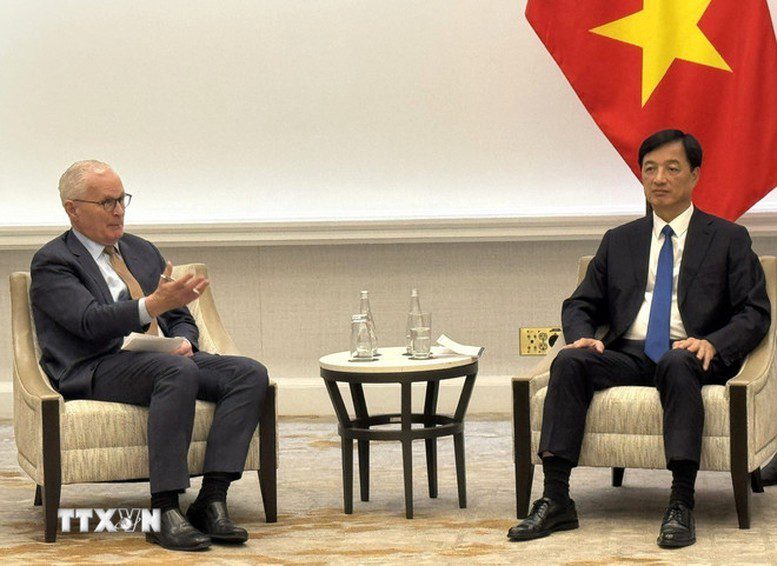
On this occasion, on behalf of the Central Steering Committee on science, technology, innovation and digital transformation, the Secretary of the Hanoi Party Committee proposed cooperation with SIA on: training and recognition of workforce certificates (a short-term priority) for STEM (Science, Technology, Engineering and Mathematics) students in short-term programmes on assembly, testing and packaging (ATP) and design in Viet Nam, possibly through US universities such as ASU; promoting direct connections between SIA member companies (Intel, Marvell, Amkor, etc.) and key universities to standardise graduate outcomes according to the actual “orders” of US companies; and advising on improving the legal framework and policies for attracting R&D investment.
Mr Nguyen Duy Ngoc acknowledged and highly appreciated Mr John Neuffer’s valuable advice and proposals for cooperation with Viet Nam in the coming period.
By VNA