The forum was organised around two figures that reflect Viet Nam’s current position in global value chains. According to the General Statistics Office, merchandise exports reached $405.5 billion in 2024, up 14.3% on the previous year, but the domestic economic sector contributed only 28.3% of that figure.
According to the World Bank’s Viet Nam 2045: Trading Up in a Changing World report, published in November 2024, the share of domestic firms connected to global value chains fell from 35% in 2009 to 18% in 2023. These two figures show that while export volumes continue to grow, the direct participation of domestic businesses in value creation has not kept pace, highlighting the need to build capacity so that Vietnamese businesses can take part more deeply in higher value-added segments of the chain.
Updated data from the Statistics Office for the first seven months of 2026 show that this gap has not narrowed: of total exports of $319.53 billion, the foreign-invested sector contributed $255.89 billion, up 26.4% and accounting for 80.1%, while the domestic sector reached only $63.64 billion, or 19.9%, up 5.8%. The difference in growth rates between the two sectors shows that export momentum still comes mainly from the foreign-invested sector.
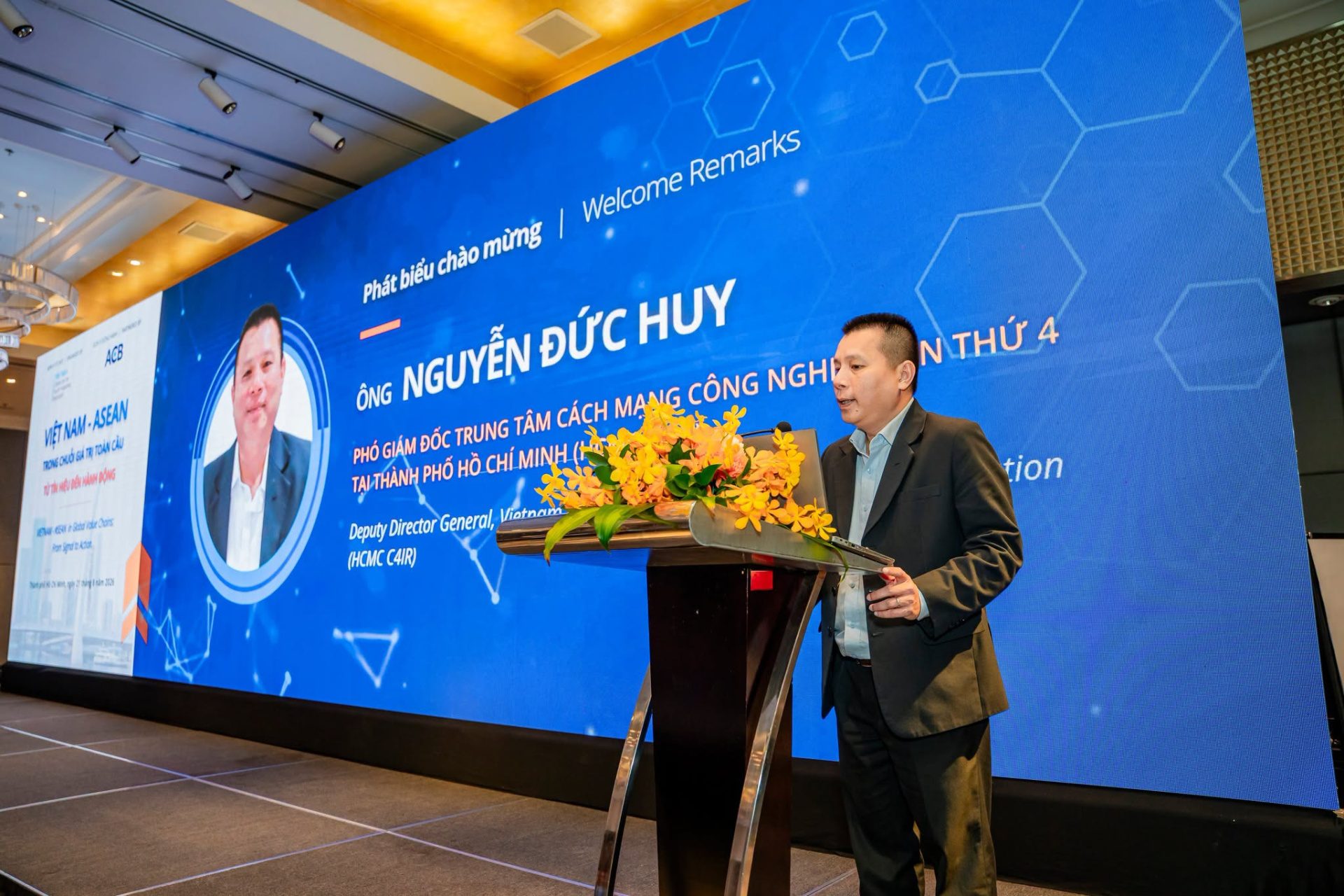
In his opening remarks, Mr. Nguyen Duc Huy, Deputy Director of HCMC C4IR, stressed that this is not a problem for a single country or a single business, as global buyers today look for a supply cluster with sufficient scale, reliability and the ability to compensate for one another when disruption occurs, rather than a single supplier.
The context of global supply chains
According to the World Economic Forum’s Global Value Chains Outlook 2026, published in Davos on 19 January 2026, global supply chains are entering a period of structural volatility rather than the cyclical shocks of the past. Nearly three quarters of manufacturing business leaders surveyed see resilience as a driver of growth, no longer simply an operating cost. The same trend was recorded in an earlier World Economic Forum survey with Kearney of more than 300 global operations and value chain leaders: 92% are regionalising their production networks, yet only 28% aim to operate an almost entirely region-for-region model by 2030.
These developments are changing how international buyers assess suppliers. Alongside the basics of quality, cost and delivery, three new groups of requirements are gradually becoming conditions for joining the chain: digital connectivity and transparency of production data; resilience and rapid adaptation to supply disruption; and measurable evidence of environmental impact and worker welfare. Suppliers are therefore judged not only on production capacity but also on how they operate and how transparent they are across the value chain.
Viet Nam’s position in trade in value-added data
At the forum, a representative of the Organisation for Economic Co-operation and Development (OECD) shared trade in value-added data showing that the share of foreign value added in Viet Nam’s exports rose from around 33% in 2010 to 48.5% in 2022, above the OECD average of 30.4%. This upward trend is consistent with an earlier estimate by the Ministry of Industry and Trade, which found that Viet Nam’s share of domestic value added fell from 69% to 52% between 2000 and 2020.
Electronics and textiles, which together account for more than half of the country’s exports, are also the two industries with the highest share of foreign value added. According to the World Bank’s Viet Nam 2045 report, in 2020 around 23.8 million Vietnamese workers, equivalent to 44.7% of the workforce, were engaged in production serving foreign demand, including around nine tenths of workers in textiles.
In his closing remarks, Mr. Nguyen Duc Huy observed that this figure shows how deeply Viet Nam’s economy is integrated into global value chains, but deep integration with a low share of retained value is a position of dependence rather than strength, and every external shock directly affects the jobs and incomes of tens of millions of people. The forum identified these figures as the basis for the central task facing Viet Nam in the coming period: not just expanding exports, but building capacity to retain more value within the very chains in which domestic businesses already participate.
At the regional level, ASEAN, with a population of more than 700 million and a combined GDP of around $3.8 trillion, is one of the world’s fastest-growing economic blocs, yet intra-regional trade accounts for only around 22% of the region’s total trade, significantly lower than the level of integration within the European Union.
In his opening remarks, Mr. Nguyen Duc Huy also noted that ASEAN spent about thirty years removing tariffs between members and has essentially achieved this goal, but the reason intra-regional trade has not matched its potential no longer lies in tariffs, but in paperwork, standards, certification and systems that are not yet connected.
The forum noted that the main barrier is no longer tariffs, as the ASEAN Trade in Goods Agreement has eliminated 98.6% of intra-regional tariff lines, but the lack of alignment in data, regulations and digital standards among member economies. This is what the ASEAN Digital Economy Framework Agreement, expected to be concluded in 2026, aims to address, opening space for Viet Nam and other economies in the region to help build a shared framework for connecting value chains.
According to the World Economic Forum, corporations now assess a country or locality on seven groups of factors, from infrastructure, technology and workforce skills to sustainable development, rather than mainly on cost.
Ms. Van Nguyen, Regional Agenda Lead at the WEF Centre for Advanced Manufacturing and Supply Chains, said ASEAN could become a trusted manufacturing hub if the region’s economies connect their complementary capabilities in production, technology, standards and talent; the region would then be able not only to attract more investment but also to retain more value in production chains.
Ms. Anne-Katrin Pfister, Head of Digital Trade Policy for Asia-Pacific at the WEF, said that according to assessments under the WEF’s ASEAN Digital Economy Agreement Leadership (ASEAN DEAL) project, DEFA could open up market opportunities worth $1–2 trillion for the regional digital economy, while noting that digital readiness still varies significantly among ASEAN countries and legal and policy systems are not yet aligned.
In his closing remarks, Mr. Nguyen Duc Huy said ASEAN’s advantage lies not in individual countries growing stronger separately, but in connecting the complementary capabilities of member economies through interoperable digital standards, technology and talent. For Viet Nam, this calls for two parallel tasks: strengthening businesses’ internal capacity through the smart manufacturing transition, and taking an active part in shaping the region’s connectivity framework.
The two dialogue sessions
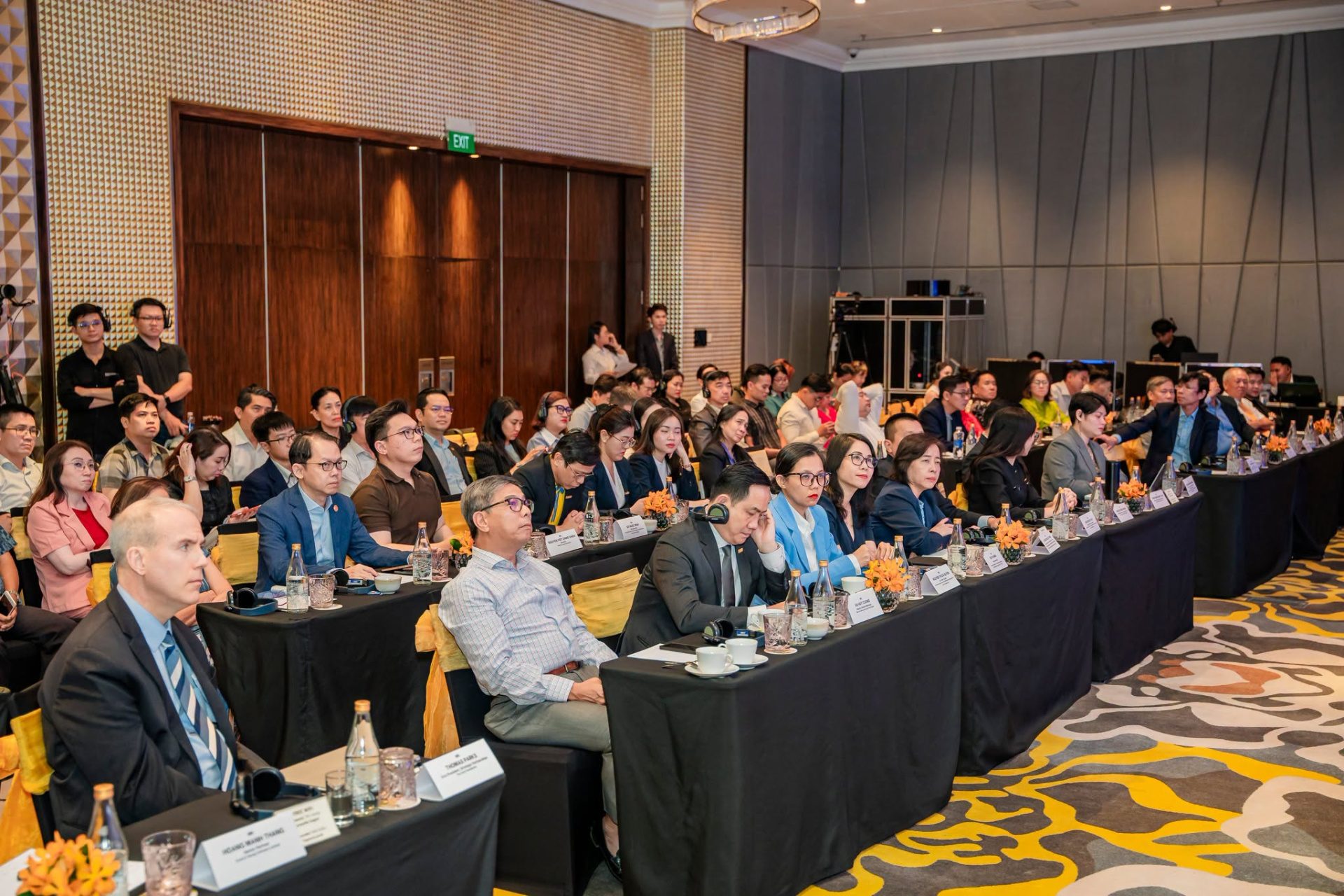
The forum programme comprised two opening presentations and two dialogue sessions. The first session, with representatives of Schneider Electric, American Fashion and The Asia Foundation, focused on the specific requirements a Vietnamese supplier must meet to move from taking orders to co-designing and co-developing products with international partners, based on technical capability, the ability to propose solutions proactively and market understanding.
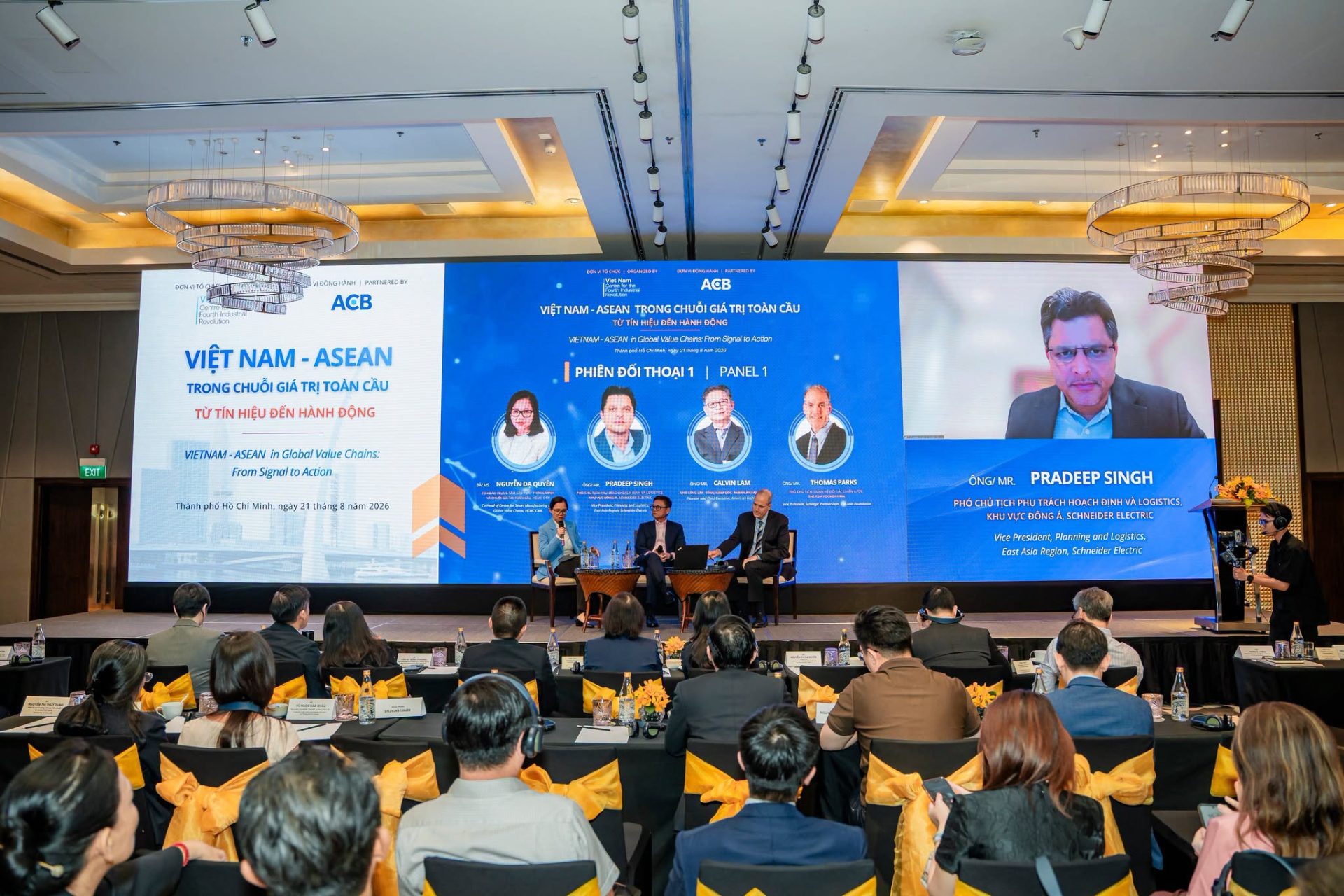
Mr. Pradeep Singh, Vice President of Planning and Logistics for East Asia at Schneider Electric, noted that shipping electronic products between ASEAN countries still faces barriers due to differing regulations and licences; after free trade agreements, it is administrative procedures rather than tariffs that are driving up the cost of production and trade in the region.
The second session brought together representatives of the Ho Chi Minh City Department of Industry and Trade, the Asian Development Bank, the World Economic Forum and the Vietnam Chamber of Commerce and Industry’s Ho Chi Minh City branch to discuss policies and support mechanisms to increase domestic value and develop Viet Nam–ASEAN value chains.
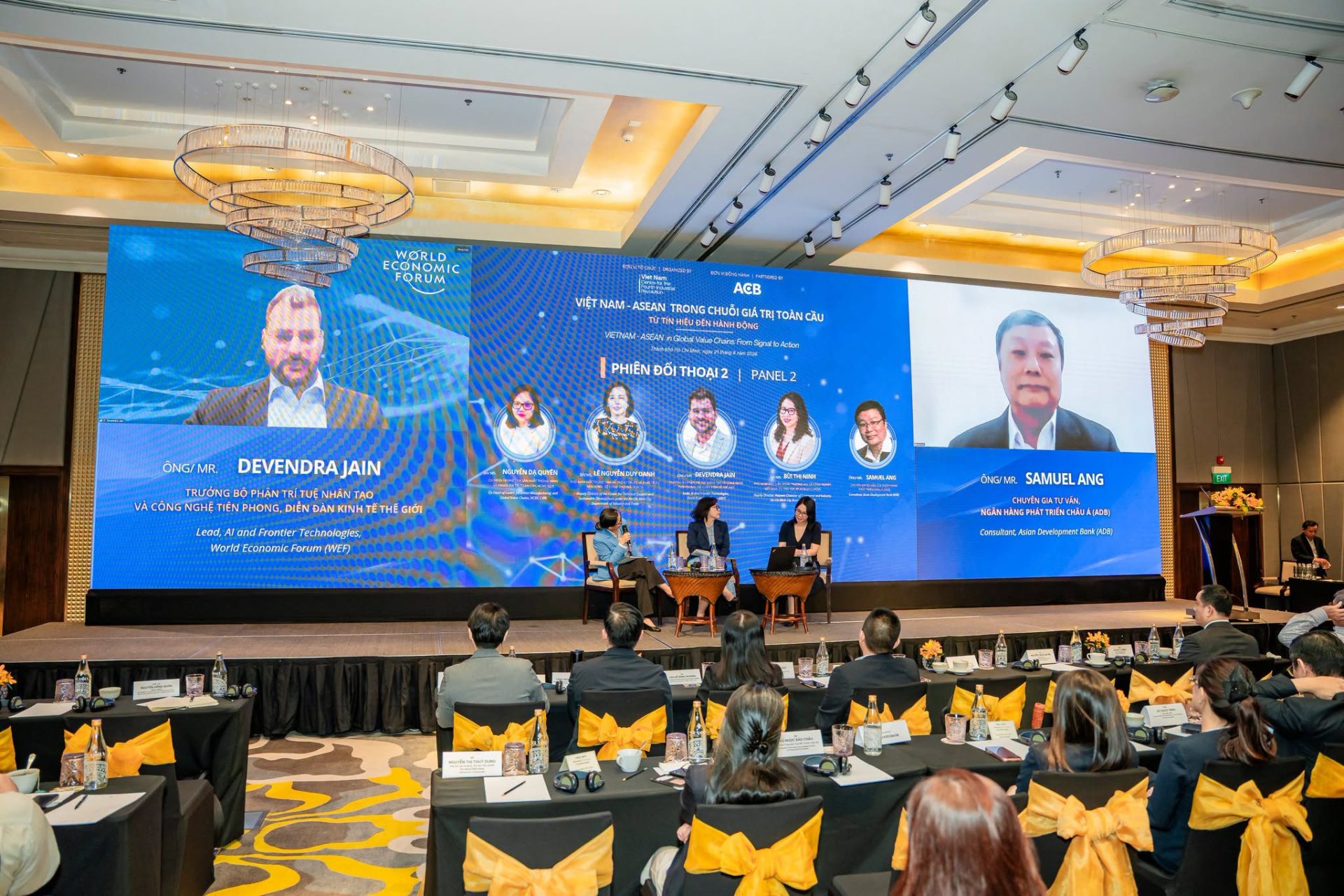
Ms. Bui Thi Ninh, Deputy Director of the Vietnam Chamber of Commerce and Industry’s Ho Chi Minh City branch, said that in some industries Vietnamese businesses already hold leading positions in supply chains, such as seafood, wood processing, cashew processing and coffee, where the key to maintaining that position is data transparency, traceability and effective chain management. In manufacturing and electronics, however, Vietnamese businesses mainly participate in assembly and the supply of simple components, where competitive prices and good production capacity alone are not enough to join the chain; international certifications for digital transformation, the green transition and ESG practices, as well as high-quality technical talent, are also needed.
Mr. Norihiko Yamano, an OECD economist, set out four requirements for fully capturing the benefits of DEFA: digitalising trade flows end to end, ensuring trusted data sharing across the value chain, building interoperable supply chain infrastructure and bringing small and medium-sized enterprises into digital supply chains.
Both sessions ended with action commitments, in which each speaker named a specific item to be implemented over the next twelve months and who would carry it out, as a basis for the Centre to continue monitoring and coordinating implementation after the forum.
A network of supporting partners
The forum was also an occasion for the Centre to announce its partners in building an ecosystem that helps businesses transition to smart manufacturing, strengthen their competitiveness and participate more deeply in global value chains. Asia Commercial Joint Stock Bank (ACB) will provide financial solutions for investment, production transformation and the green transition, with a particular focus on small and medium-sized enterprises.
The Institute for Circular Economy Development is the expert partner on ESG and the circular economy, while EY Vietnam joins as knowledge partner, collaborating on research and refining the implementation framework and assessment methodology. The Lean Vietnam community supports operational improvement and process standardisation. Global Hi-Tech Vietnam JSC supports digital platform development. Gradion Vietnam joins the advisory team, helping businesses turn assessment results into concrete action roadmaps. CITARES Co., Ltd. supports capacity building and technical workforce development.
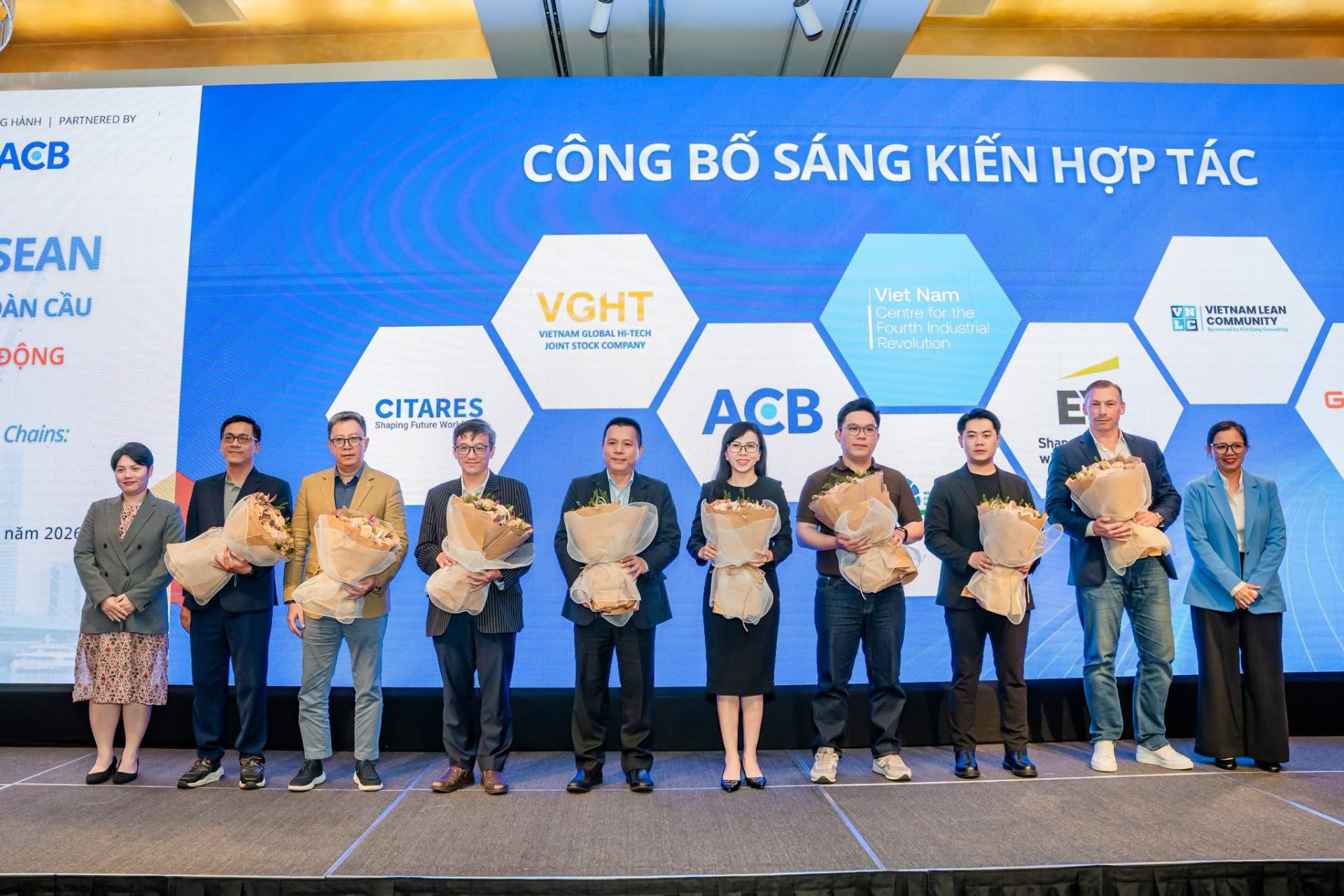
Through this partner network, HCMC C4IR aims to establish an end-to-end support mechanism for businesses, from capability assessment and roadmapping to operational improvement, technology adoption, access to finance, ESG transformation and workforce development, helping raise productivity and supporting businesses as they move step by step into higher value-added segments of global value chains.
According to population projections for 2024-2074 led by the Statistics Office with the United Nations Population Fund, Viet Nam will officially become an aged society in 2034, when people aged 65 and over reach 14% of the population, two years earlier than previously forecast. The forum identified this as evidence that efforts to strengthen Vietnamese businesses’ participation in global value chains must be carried out within a defined timeframe, before the demographic dividend, the foundation of a competitive model based on labour costs, gradually narrows over the next decade.
The VSM70 pilot programme
Alongside the forum, HCMC C4IR is running the VSM70 smart manufacturing transition pilot programme, selecting seventy small and medium-sized manufacturers with factories in the City. Each participating business chooses one priority operational problem and resolves it within ninety days, with experts working alongside them on the factory floor. The programme is free of charge, technology-neutral and ensures the confidentiality of participants’ information and data; businesses remain in charge throughout implementation. Applications are accepted until mid-September 2026, with selection in September and agreements signed in October 2026.
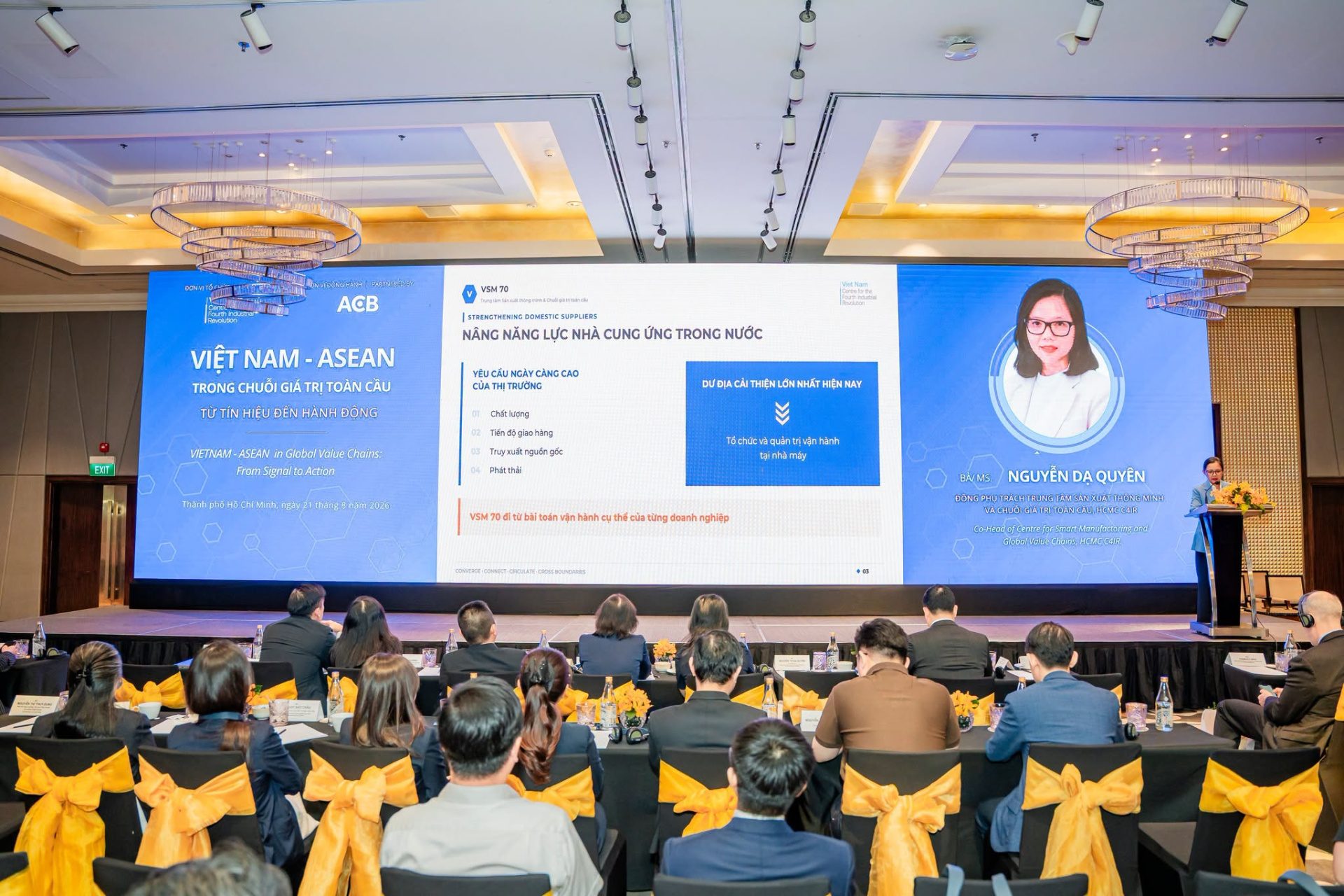
HCMC C4IR invites departments, agencies, industry associations and the management boards of export processing zones and industrial parks to introduce the programme to suitable businesses, and welcomes referrals from lead firms and foreign-invested enterprises for their suppliers. VSM70 is one of the concrete mechanisms through which the Centre is putting into practice the direction set at the forum of helping businesses strengthen their operational capabilities, linked with the partner network above.
Building on the forum’s results, HCMC C4IR will continue working with international partners and its network of supporting businesses to put into practice the actions named by speakers in the two dialogue sessions, implement the VSM70 programme on schedule, and compile and report to the competent authorities on directions for helping domestic businesses strengthen their participation in global value chains, in line with the functions and tasks assigned under Decision No. 4174/QD-UBND of 25 September 2024 of the Ho Chi Minh City People’s Committee.