One of the notable new elements of Resolution 79 is the shift in development thinking from “running in parallel” to an “ecosystem of linkages” between economic sectors. According to experts and businesses, when state-owned enterprises are given a role in building and leading, and private enterprises gain more space to join large value chains, the economy will develop new growth drivers that are more mutually reinforcing and sustainable.
State-owned enterprises as an “ecosystem-building core” leading other sectors
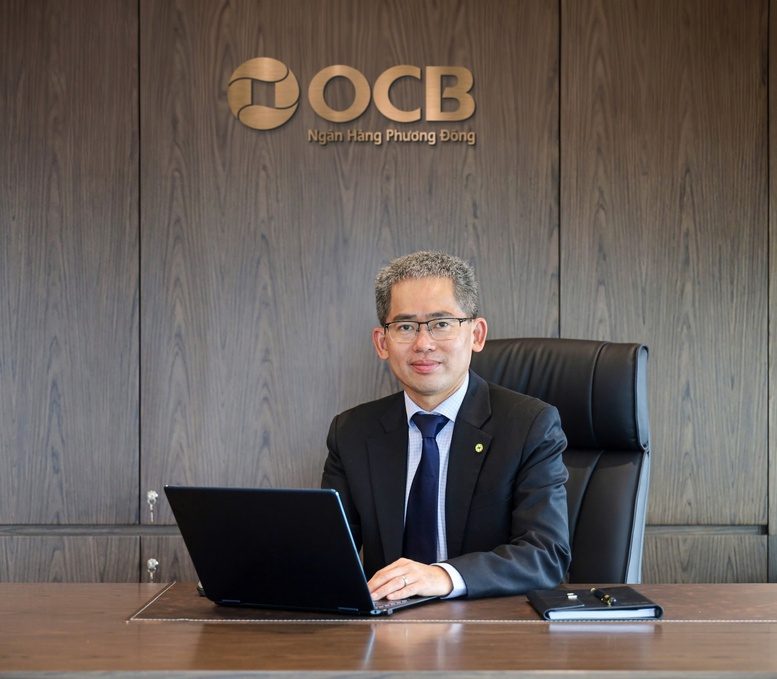
Mr. Pham Hong Hai, CEO of Orient Commercial Joint Stock Bank (OCB):
In my view, the core of Resolution 79 is to create a mechanism strong enough to remove long-standing “bottlenecks” in the SOE sector, especially in governance, resource allocation and accountability. Once these barriers are removed, SOEs will be able to operate more flexibly on market principles, improving investment efficiency, optimising resources and strengthening competitiveness.
More importantly, the Resolution does not stop at “removing obstacles”; it also redefines the role of SOEs as an “ecosystem-building core” leading key sectors such as infrastructure, energy and logistics. When large-scale projects are implemented in a coordinated and effective way, they create a solid infrastructure foundation that mobilises social capital, spreads to other sectors and drives sustainable growth for the whole economy.
One of the notable new elements of Resolution 79 is the shift in development thinking, from a model in which economic sectors operate relatively independently to a connected ecosystem in which sectors complement and reinforce one another.
The spirit of connection between economic sectors in Resolution 79 is therefore very significant. For the first time, the role of private enterprises is placed within a value chain closely linked with SOEs, rather than existing alongside them as before.
The Resolution lays out specific foundations, such as transparent ordering and bidding mechanisms, the promotion of public-private partnership and, in particular, encouraging SOEs to “open” their ecosystems so that private businesses can take part more deeply in large-scale projects.
This allows private businesses to go beyond being suppliers and become strategic partners, sharing value and risk in the value chain. I believe this will help Viet Nam’s economy keep moving forward.
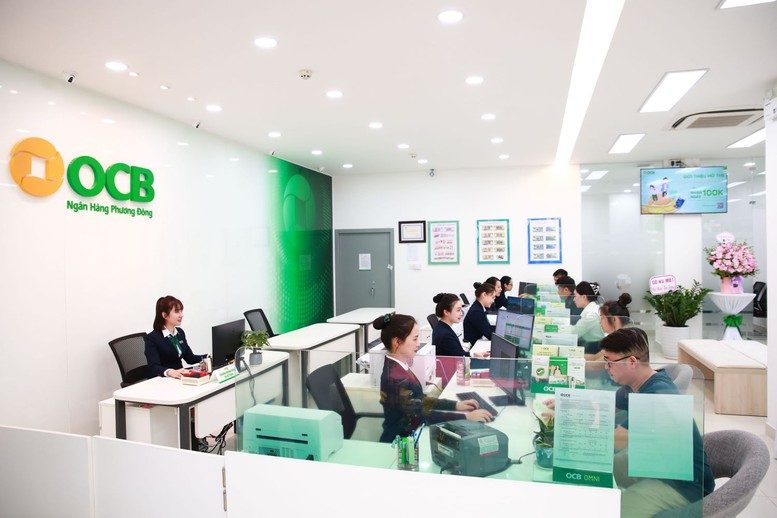
As the digital economy and the green economy become dominant trends, businesses, especially in banking and finance, need mutually reinforcing policies to break through. Key factors include a priority credit mechanism for green and digital transformation projects to encourage capital flows into green projects.
We also need a clear and flexible legal framework for new financial models such as fintech and digital banking, and in particular policies that encourage innovation and the testing of new business models. I believe these factors will help the private sector break through while creating real synergy with the SOE sector, forming deeper and more competitive value chains.
As Resolution 79 creates a more open legal corridor with groundbreaking special mechanisms, its impact will not stop at the SOE sector but will spread strongly to the financial and banking system, especially private banks.
First, as key infrastructure projects and large value chains are unblocked, demand for medium- and long-term capital will rise sharply. This is an opportunity for banks to expand credit selectively while improving asset quality by participating in projects with strong fundamentals and wide spillover effects.
Second, a more transparent and flexible legal corridor will give banks more initiative in their business strategies. This includes developing green finance and digital finance products and participating more deeply in public-private partnership models and SOE-led value chains.
Resolution 79 is opening a new stage of development in which the banking system is not only the “lifeblood” of the economy but also one of the forces building and leading sustainable growth.
Building large-scale agricultural value chains together
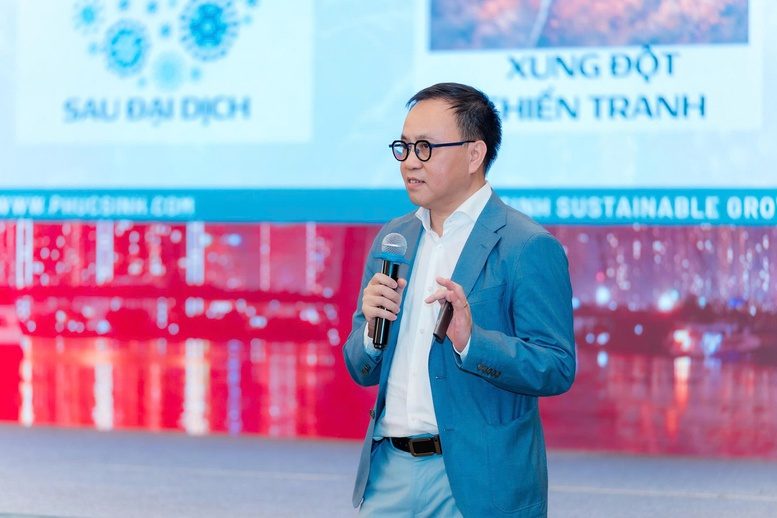
Mr. Phan Minh Thong, Chairman of Phuc Sinh Group:
In my view, Resolution 79 sets an important requirement: businesses must operate to international standards.
When Resolution 79 requires SOEs to internationalise their governance and lead in technology, I see a huge opportunity to restructure Viet Nam’s agricultural ecosystem.
Private businesses have advantages in speed, market adaptability and international customer networks. State groups, meanwhile, have advantages in scale, infrastructure and the ability to lead large programmes.
If both sectors operate under a modern and transparent governance standard, Viet Nam can build large-scale agricultural value chains with clear traceability data that fully meet sustainable development requirements. I believe this is the key for Vietnamese agricultural products not only to export more but also to move into higher-value segments in markets such as the EU and the United States.
Resolution 79’s focus on modernising national infrastructure such as seaports, warehousing and logistics is a key prerequisite for reducing export costs, which will greatly improve the competitiveness of Vietnamese goods in global markets.
If state infrastructure companies move to modern, transparent governance and apply technology, we can expect many positive changes: optimised flows of goods, shorter storage and customs clearance times, better connections between raw material areas, factories and seaports, and greater stability and predictability in supply chains.
Logistics costs are currently one of the biggest challenges for Vietnamese agricultural exporters. At times logistics accounts for 20–30% of product value, compared with only around 10–15% in many competing countries. As a result, Vietnamese agricultural products, despite their good quality, still struggle to compete on price in international markets.
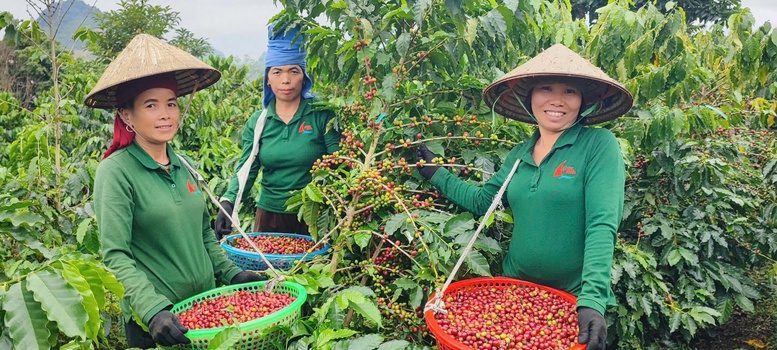
For exporters like Phuc Sinh, if logistics costs are optimised and infrastructure runs more efficiently, we will have more resources to invest in product quality, develop sustainable raw material areas and increase the added value of Vietnamese agricultural products.
I believe that when national infrastructure is modernised and governed to international standards, combined with the dynamism of the private sector, Viet Nam can build agricultural supply chains that rank among the most competitive in the world.
The state economy “paves the way”, small and medium-sized enterprises break through in new value chains
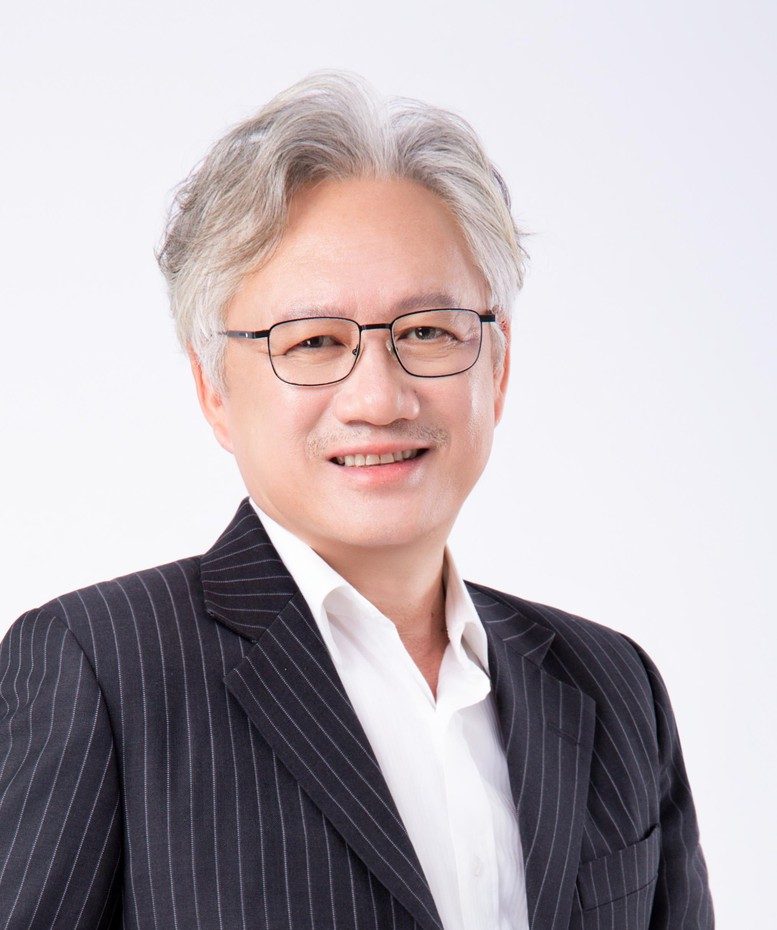
Dr. Le Van Hy, Vice Chairman and Secretary General of the Ho Chi Minh City Association of Small and Medium Enterprises:
In my view, what stands out in Resolution 79 is that it not only reaffirms the leading role of the state economy in the socialist-oriented market economy, but goes straight to the need to renew how that role is exercised, in a more modern, effective and genuinely leading way. This is a new step in thinking about the state economy as the country enters a new stage of development.
Resolution 79 clearly requires all state resources to be fully accounted for on market principles, and the functions of state management, ownership, political tasks and business activities to be separated. It also more clearly defines the mission of state-owned enterprises in the new period: to pioneer development, lead and pave the way, especially in key, essential and strategic sectors such as energy, logistics, finance and banking, digital infrastructure, electronics and telecommunications, technology and strategic minerals.
The most important mechanism Resolution 79 opens up is to enable SOEs to lead by investing in strategic infrastructure, core technology, digital transformation, the green transition and new value chains. With better infrastructure, better data, more stable energy and more efficient logistics, not only SOEs but the entire Vietnamese business sector benefits.
For the small and medium-sized business community, Resolution 79 opens up far greater opportunities than commonly understood. The Resolution’s clear spirit is that SOEs should not develop in isolation, but must connect, lead, mobilise and spread resources to other sectors. This is a very important space for the development of small and medium-sized enterprises.
The opportunity for SMEs, therefore, is to participate more deeply in value chains led by large state groups and corporations, especially in logistics, supporting industries, technology services, digital transformation, energy, materials, high-tech agriculture and the green economy.
An economy with better infrastructure, better public data, no overlapping procedures and clearer oversight is one in which SMEs have more opportunities to access markets and lower compliance costs. In that sense, SMEs are not only beneficiaries of support but also beneficiaries of a healthier institutional system.
However, opportunities only become reality if SMEs have the capacity to enter these chains. In the new context, SMEs cannot develop in the old way, with manual management, thin capital, low technology and weak linkages. When SOEs raise their standards of governance, technology and transparency, their partners and suppliers must raise theirs accordingly. This means SMEs will have to change more strongly in governance, human resources, finance, digitalisation, environmental standards, traceability, legal compliance and contract performance.
Resolution 79 should therefore be seen in conjunction with Resolution 68. Resolution 68 clearly identifies the private economy as the most important driver of the national economy and emphasises removing barriers in institutions, capital, land, science and technology, innovation, chain linkages and the development of entrepreneurs. While Resolution 79 creates a “locomotive” in the state sector, Resolution 68 must ensure the “capacity to participate” of the private sector, especially SMEs. Only when the two resolutions are implemented together can a development ecosystem take shape with solid support, momentum, spillover and stronger national competitiveness.
If the state economy plays its role of paving the way, building and stabilising well, and if the private economy is given more resources to break through, SMEs will be the force that turns the spirit of the two resolutions into the vitality of everyday economic life. This is also the path to strengthening national capacity and economic resilience, and to helping Vietnamese businesses integrate more deeply and confidently into regional and global value chains.
Interviews by Thanh Thuy / Government Electronic Newspaper