With Viet Nam having just officially launched its International Financial Centre, and Ho Chi Minh City identified as a key development pole, the working session was an occasion to exchange and share with international partners the vision, direction and development model of Viet Nam’s IFC. Through it, Ho Chi Minh City sought to demonstrate a proactive role in connecting national financial initiatives with the network of global financial centres, institutions and investors, laying the foundation for strategic cooperation and attracting high-quality capital in the new stage of development.
An institutional milestone in Viet Nam’s financial development
The policy of building an International Financial Centre in Viet Nam stems from the structural requirements of a new development stage, as the size of the economy, its trade openness and its participation in global value chains keep growing, while a financial system mainly serving the domestic market has revealed many limitations. On this basis, at its 10th session the 15th National Assembly adopted Resolution No. 222/2025/QH15 of 27 June 2025, establishing the International Financial Centre in Ho Chi Minh City and Da Nang and setting up a special policy framework to upgrade the capital market, develop modern financial institutions and products, and strengthen connections with international capital flows.
On that institutional foundation, Ho Chi Minh City has been identified as a central development pole of the Viet Nam International Financial Centre. This choice reflects not only the City’s economic scale and its role as the engine of growth, but also its historical position as a centre of renewal, an early adopter of market economy standards, home to the country’s largest financial, banking and business ecosystem, and a frequent pioneer in piloting new mechanisms and policies. In this approach, the IFC in Ho Chi Minh City is seen not as an infrastructure project or a purely functional zone, but as an institutional space where international financial standards, modern technology and advanced governance are tested, operated and spread.
More broadly, Viet Nam’s formal decision to build the IFC marks an important shift in development thinking. The IFC is intended not only to attract high-quality capital, but also to serve as a lever for institutional reform, restructuring the financial system and mobilising resources for sustainable development, green finance, science and technology, and innovation. The National Assembly’s resolution and the Government’s establishment of a unified governance model and executive apparatus show that the IFC has moved beyond the orientation stage into substantive implementation, which in turn requires bringing the model into the global financial dialogue, where standards, expectations and capital flows are shaped at the strategic level.
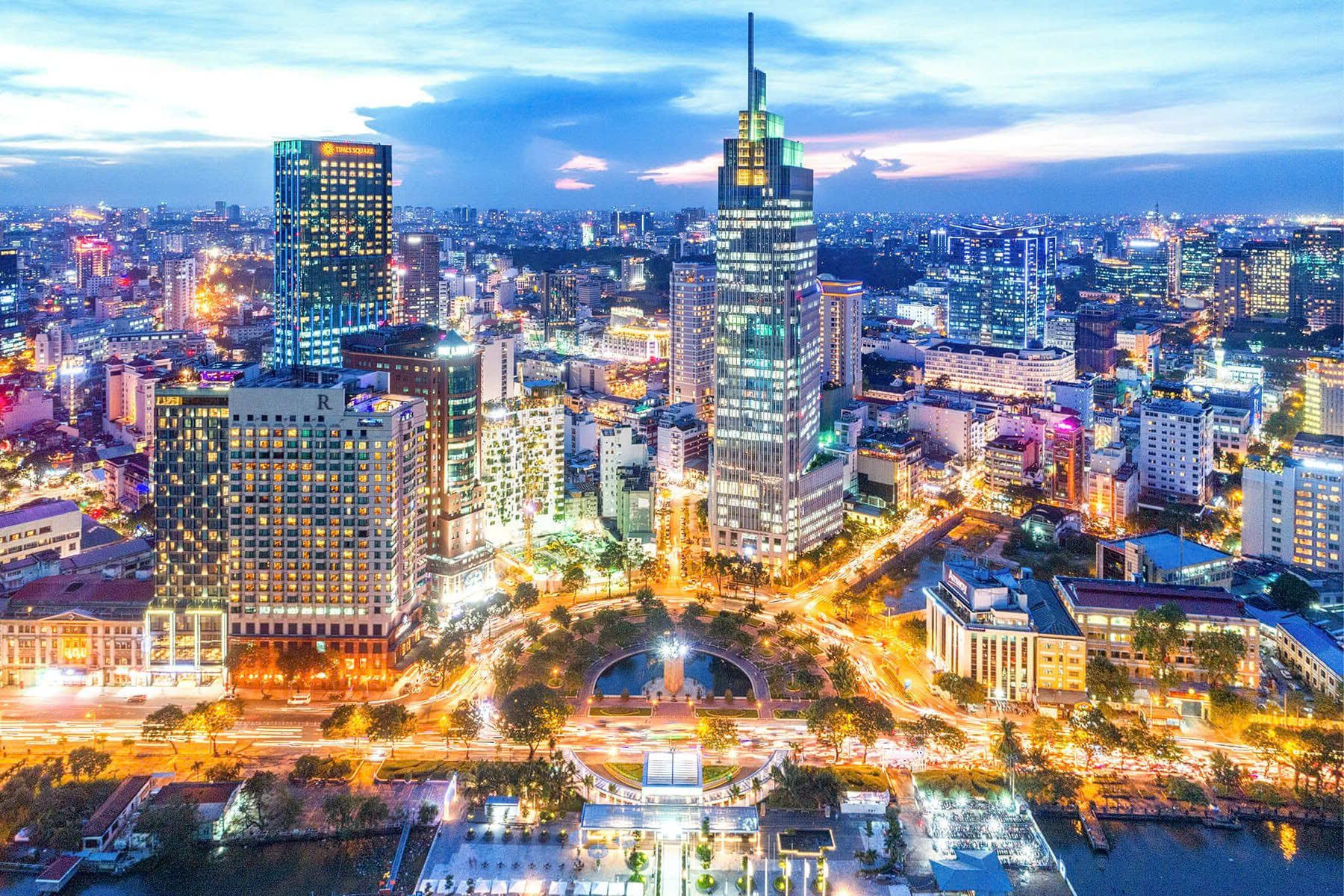
Photo: VietNamFinance
Davos: where resources converge and the global financial dialogue is shaped
For decades, the World Economic Forum’s Annual Meeting in Davos has gone far beyond an annual conference to become a special space where global currents of thought, policy and economic resources meet. Davos is not only where political and economic leaders exchange views, but also the starting point of many major trends, where new development models are put on the table and examined against a volatile global backdrop. For finance, Davos acts as a “strategic filter”, where financial institutions, investment funds and policymakers look for long-term, stable growth opportunities with solid institutional foundations.
Davos 2026, under the theme “A Spirit of Dialogue”, continues to emphasise the role of dialogue in finding solutions to global challenges, with finance seen as a central tool for driving economic transformation. This year’s agenda focuses on green finance, sustainable finance, finance for innovation and new high-tech economic sectors. These are not merely passing trends, but reflect a fundamental shift in global capital flows, as investors increasingly favour markets that combine growth, institutional stability and sustainable development.
It is in this context that Davos is a particularly suitable setting to present the vision of the IFC in Ho Chi Minh City. Here, investors and financial institutions are not looking for short-term incentives, but care about institutional quality, policy predictability and an economy’s long-term prospects. Placing the IFC in the Davos setting thus means placing the model in a high-level dialogue that demonstrates the potential and integration readiness of a new financial centre.
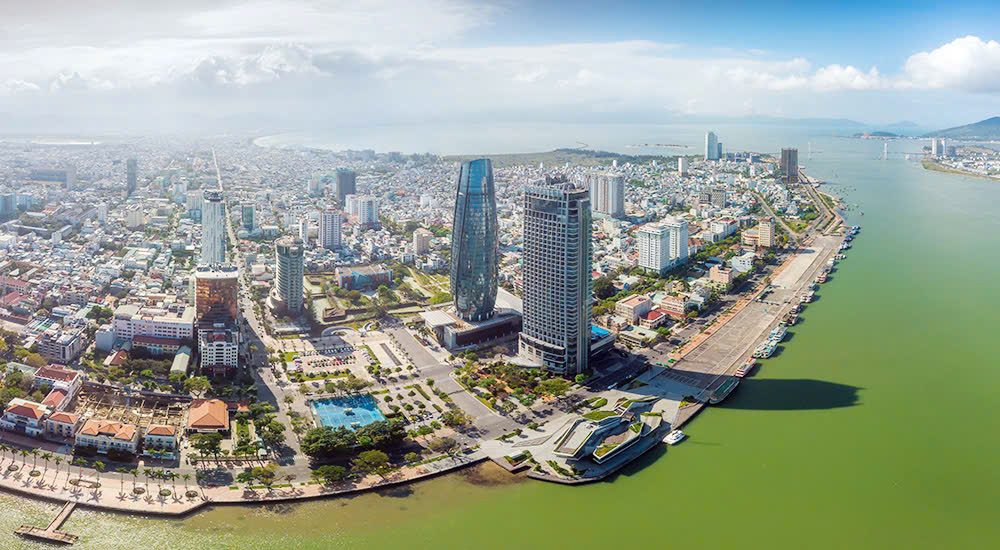
Photo: Thoi bao Ngan hang
A strategic message on the IFC in Ho Chi Minh City
Within this dialogue, the working lunch hosted by the Ho Chi Minh City delegation clearly reflects the approach of Ho Chi Minh City and Viet Nam: taking an active part in global policy dialogue from the earliest stage of implementing the model.
This is a deliberately designed message, aimed at bringing the IFC in Ho Chi Minh City to the attention of key players in the global financial ecosystem, from banks, investment funds and exchanges to financial technology companies.
Strategically, the working lunch is not merely a promotional activity, but the start of a long-term series of dialogues between Ho Chi Minh City, Viet Nam and the international financial community. The event will open up the potential to attract global finance linked to innovation, technology and sustainable development, which are key factors for the next stage of Viet Nam’s economic development.
Viet Nam C4IR