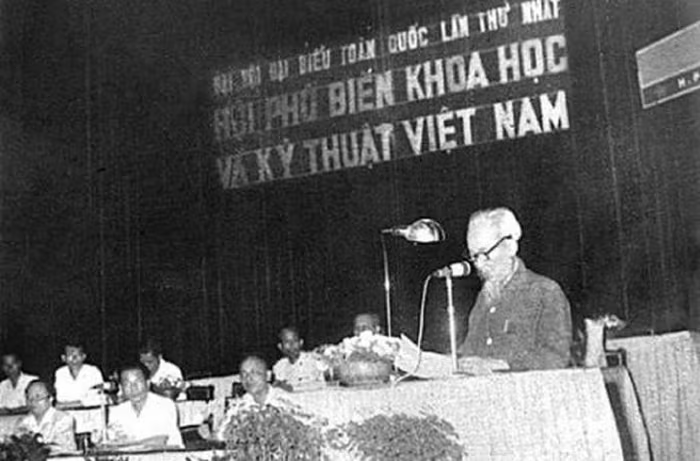
On 18 June 2013, at its 5th session, the 13th National Assembly officially designated 18 May each year as Viet Nam Science and Technology Day. In 2026, this anniversary takes on new significance as the whole country is in the “acceleration” phase of implementing Resolution 57-NQ/TW on breakthroughs in science, technology, innovation and digital transformation in the nation’s era of rising.
Resolution 57: the most important breakthrough
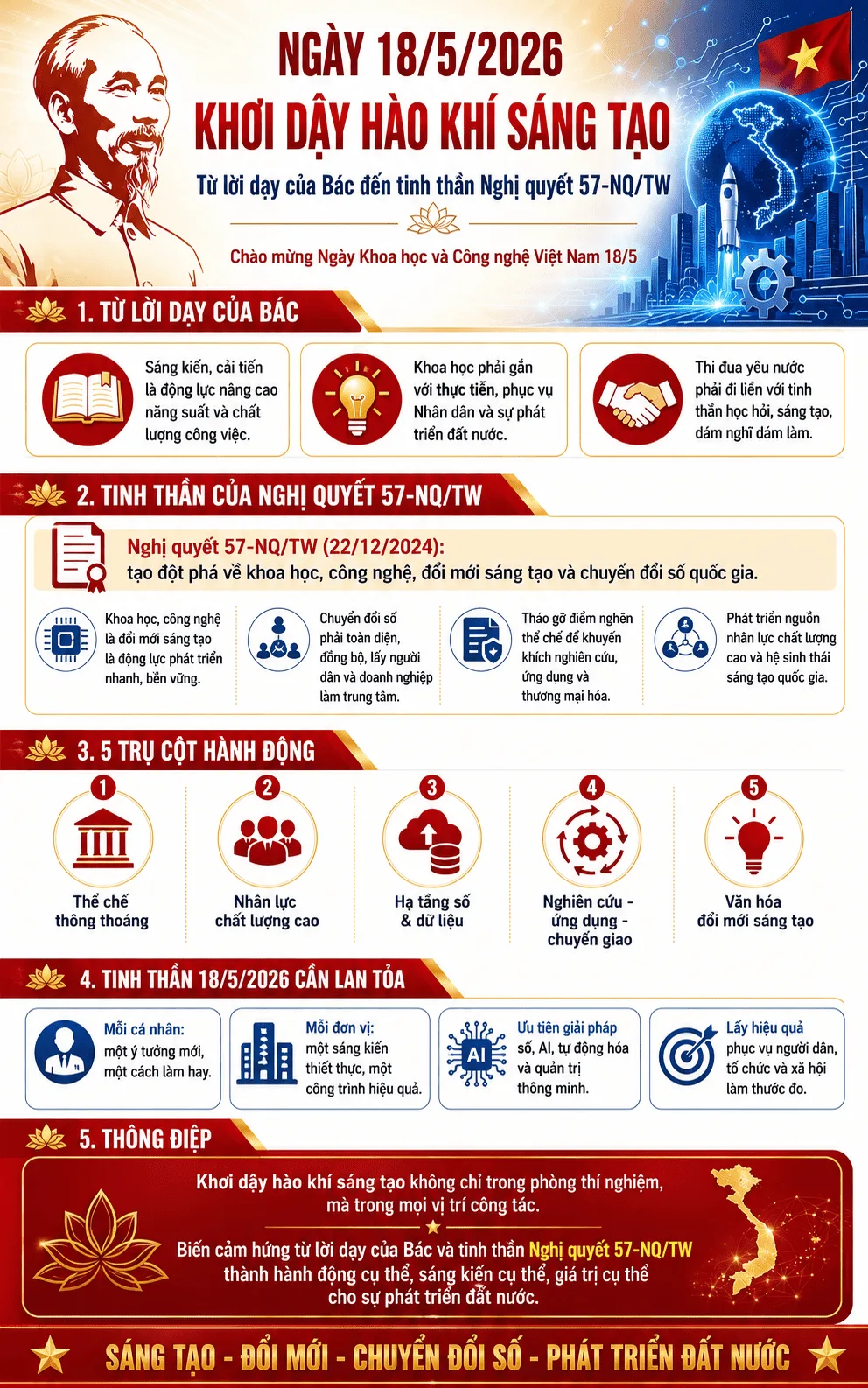
The Politburo’s Resolution 57-NQ/TW, issued on 22 December 2024, marked a turning point in strategic thinking. For the first time, science, technology, innovation and digital transformation were identified as “the most important breakthrough” and the core driver for modernising the productive forces and renewing national governance.
The strategic goals are clear: by 2030, the digital economy must contribute at least 30% of GDP and spending on research and development (R&D) must reach 2% of GDP. With a vision to 2045, Viet Nam aims to become a developed, high-income country, with the digital economy accounting for more than 50% of GDP and ranking among the world’s top 30 countries in innovation. To achieve this, five pillars of action are being implemented decisively: open institutions; high-quality human resources; digital and data infrastructure; applied research; and building a culture of innovation.
Initial results in the acceleration phase
If 2025 was the year of “launch and building the legal foundation”, with the adoption of the Law on Science, Technology and Innovation (No. 93/2025/QH15), then 2026 is the moment of transition to the “acceleration” phase. In the words of General Secretary and State President To Lam: “2026 must be a year of breakthrough action and spreading real results”.
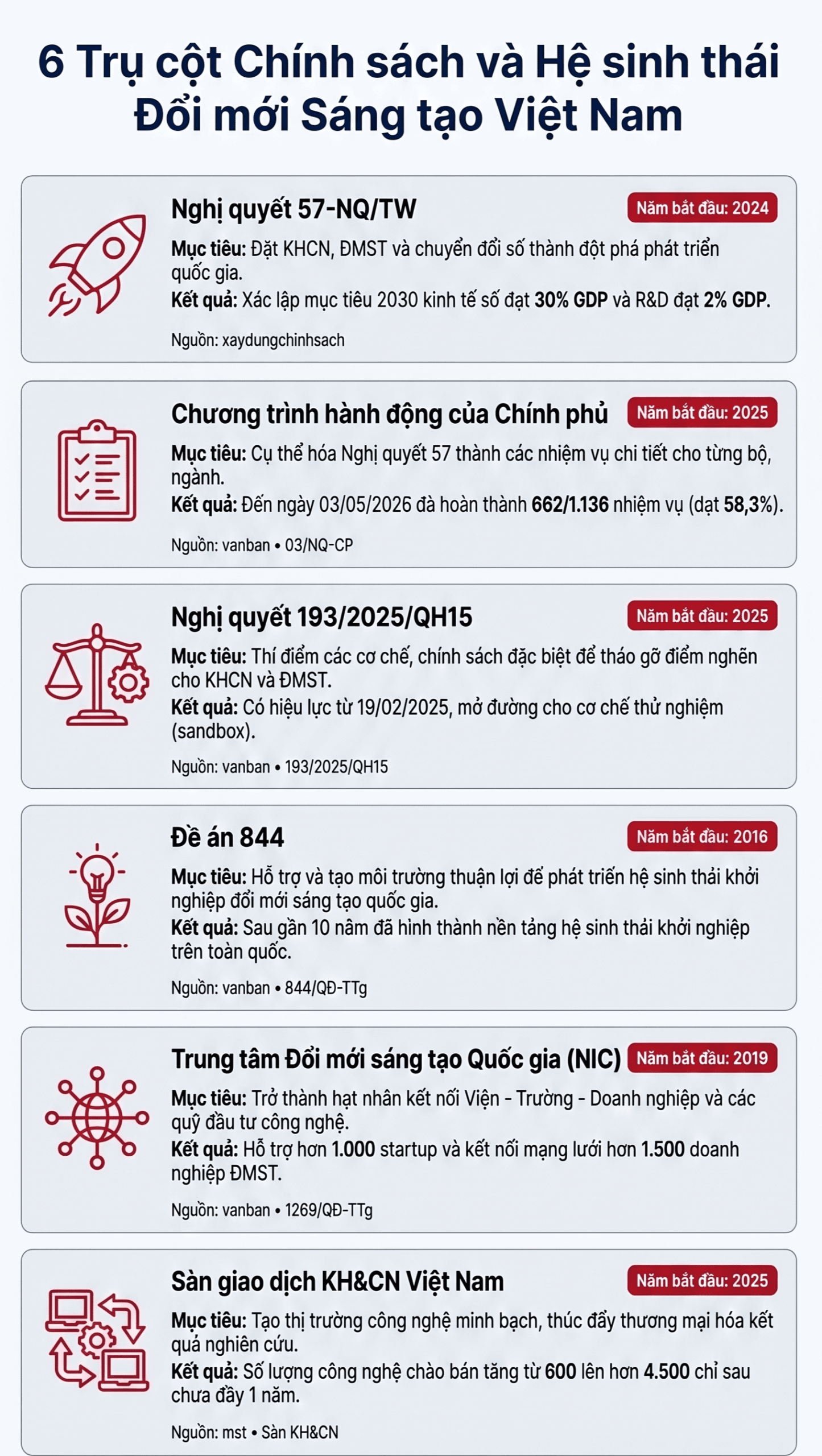
Actual figures as of May 2026 demonstrate the vitality of Resolution 57:
-
Task progress: Of the 1,136 key tasks, 662 have been completed (58.3%).
-
Digital infrastructure: 5G population coverage has reached an impressive 91.9%, with more than 22.4 million subscribers. Exports of digital technology products in Q1/2026 exceeded USD 45 billion, up 32.2% year on year.
-
Science market: The Viet Nam Science and Technology Exchange recorded a boom as the number of technologies offered for sale rose from 600 to more than 4,500 in just one year.
-
International standing: In WIPO’s 2025 Global Innovation Index (GII), Viet Nam rose to 44th out of 139 economies, affirming its potential to shift from “processing and assembly” to “mastering knowledge and creativity”.
Barriers that must be decisively removed
Despite many achievements, there are still “bottlenecks” that Resolution 57 frankly identifies. One is the fear of making mistakes and of responsibility in science management, a field that inherently involves risk and delays. Financial mechanisms remain heavily administrative and have not truly shifted to management by “outputs”.
In particular, gaps remain in the links between the “three houses” (State – Scientists – Businesses). Business R&D spending is still low compared with other countries in the region. To reach the target of 2% of GDP by 2030, activating capital flows from the private sector, venture capital funds and large technology groups is an urgent task. In addition, the shortage of high-quality talent in key fields such as AI, semiconductors and cybersecurity remains a major challenge for the economy.
From slogans to a culture of action
This year’s message for Science and Technology Day on 18 May is to turn the inspiration of Uncle Ho’s teachings and the spirit of Resolution 57 into measurable value. The spirit of creativity must not be confined to laboratories; it must be present on every production line, in every public service and in the mindset of every digital citizen.
Science and technology are not a distant story; they are labour productivity, the competitiveness of Vietnamese businesses internationally and people’s quality of life. When institutions are unblocked, data is connected and talent is valued, the spirit of creativity will truly become an internal resource that propels Viet Nam forward in the new era.