The decision is a concrete step towards achieving the 17 Sustainable Development Goals (SDGs) by 2030 in a coordinated way and delivering on Viet Nam’s commitment to net-zero emissions by 2050.
A target of supporting 25,000 green businesses
Over the next five years, the Programme aims to help around 25,000 enterprises, household businesses and cooperatives move to sustainable business models. It will also build at least 20 successful flagship models to share experience and create a green transition effect across the business community.
Besides raising awareness among economic actors, the Programme focuses on building the capacity of officials and civil servants working in management and advisory roles, and on attracting and mobilising lawful resources, especially private sector capital, to implement sustainable initiatives.
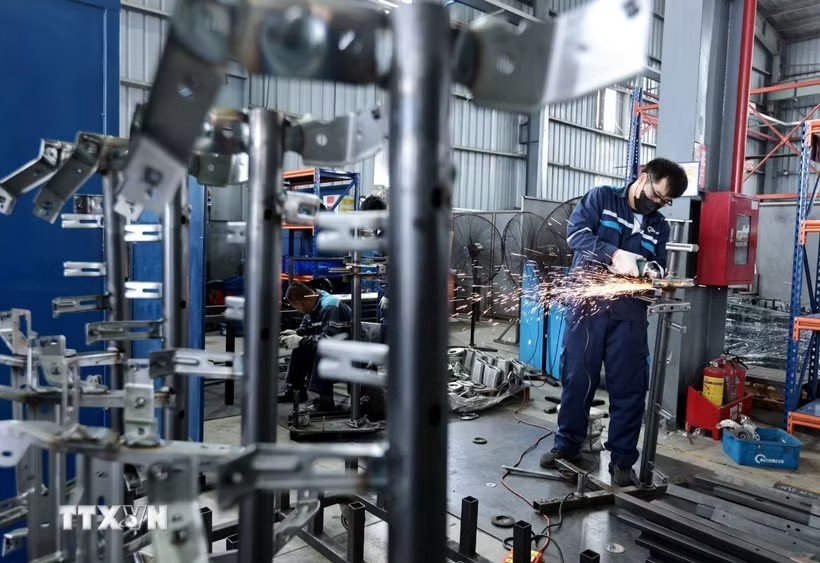
The Programme’s ecosystem is clearly structured around three groups of actors:
Beneficiaries: Private enterprises, household businesses, cooperative groups, cooperatives and unions of cooperatives that operate or aim to operate sustainably.
Service providers: Research institutes, universities, associations and legal entities carrying out support and promotion activities.
Supporting agencies: Ministries, central agencies, provincial People’s Committees and member organisations of the Viet Nam Fatherland Front assigned tasks and budgets for implementation.
The Government’s support strategy will prioritise three core models: the circular economy model; the inclusive business model (linking economic benefits with low-income and disadvantaged groups); and models applying environmental, social and governance (ESG) standards and other sustainable business practices.
Criteria for screening beneficiaries
To access the Programme’s support, enterprises, household businesses and cooperatives must meet at least one of the following prerequisites:
- Holding awards, certificates or certifications (at international, national or provincial level), or ISO certification, related to the green transition, the circular economy, ESG, inclusive business or social responsibility.
- Being a social enterprise recognised under the law.
- Directly implementing green projects or projects that meet circularity criteria, or applying an ESG standards framework.
- Fully meeting the criteria for identifying sustainable business models published on the National SME Support Portal, or the criteria framework set out in the Appendix to Decision 926/QD-TTg.
Three comprehensive pillars of action
The 2026-2030 sustainable business support programme will be implemented in a coordinated way through three main groups of activities:
Developing the supporting ecosystem
The Government will step up communications and public awareness through the mass media and social networks. It will also build a network of specialist advisers, develop dedicated digital platforms and hold an annual Sustainable Business Forum. This group of activities also focuses on unlocking capital by encouraging credit institutions to design green financial products and impact investment, and by promoting public-private partnership (PPP) models.
Direct and comprehensive support for businesses
This is the core strand delivering practical benefits to participants, with four main components:
- Advisory services and training: Support for designing sustainable business models and strategies, internal governance and access to finance, and in-depth training courses in Viet Nam and abroad.
- Science, technology and innovation: Support for finding and transferring technology; applying technical standards and sandbox mechanisms; covering the costs of testing, quality measurement and intellectual property; and funding the rental or purchase of digital transformation and artificial intelligence (AI) solutions.
- Trade promotion: Support for the costs of registering and maintaining stores on major domestic and international e-commerce platforms, and funding for participation in trade fairs and exhibitions to expand markets for green products.
Management, monitoring and independent evaluation
To ensure that budget funds and support resources are used transparently and as intended, the Programme will develop guidance documents and a rigorous monitoring framework. Regular and ad hoc inspections will be carried out continuously, combined with independent mid-term and end-of-period evaluations, so that policies can be adjusted promptly to market realities.
The adoption of the 2026-2030 sustainable business support programme is a necessary step as Viet Nam moves decisively towards a green economy. It is not only a springboard for domestic businesses to strengthen their global competitiveness but also a foundation for building a modern, balanced and sustainable economy.
Business models applying the circular economy: Business models in which the design, production, consumption and supply of products and services aim to reduce the extraction of raw materials, recycle, reuse, extend product life, limit waste and minimise negative environmental impacts.
Inclusive business models: Business models that involve low-income people in the value chains of enterprises, household businesses and cooperatives, in which low-income people can take part as suppliers, customers, distributors or workers in production and business activities that create shared value.
Business models applying environmental, social and governance (ESG) standards and other sustainable business models: Business models that ensure sustainability in business governance, economic efficiency, environmental protection, climate change response and social welfare.