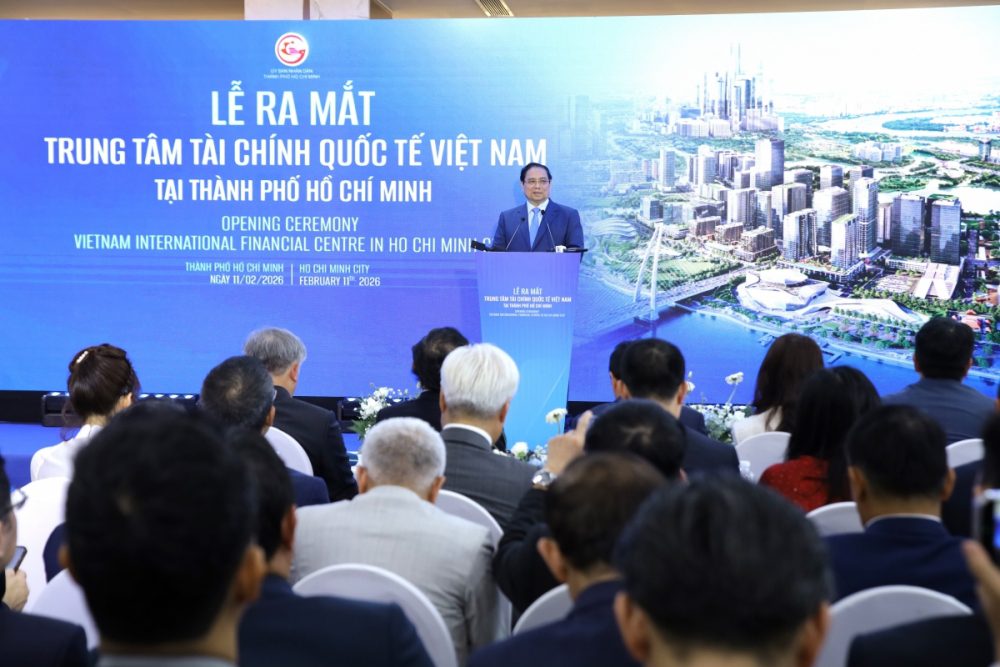
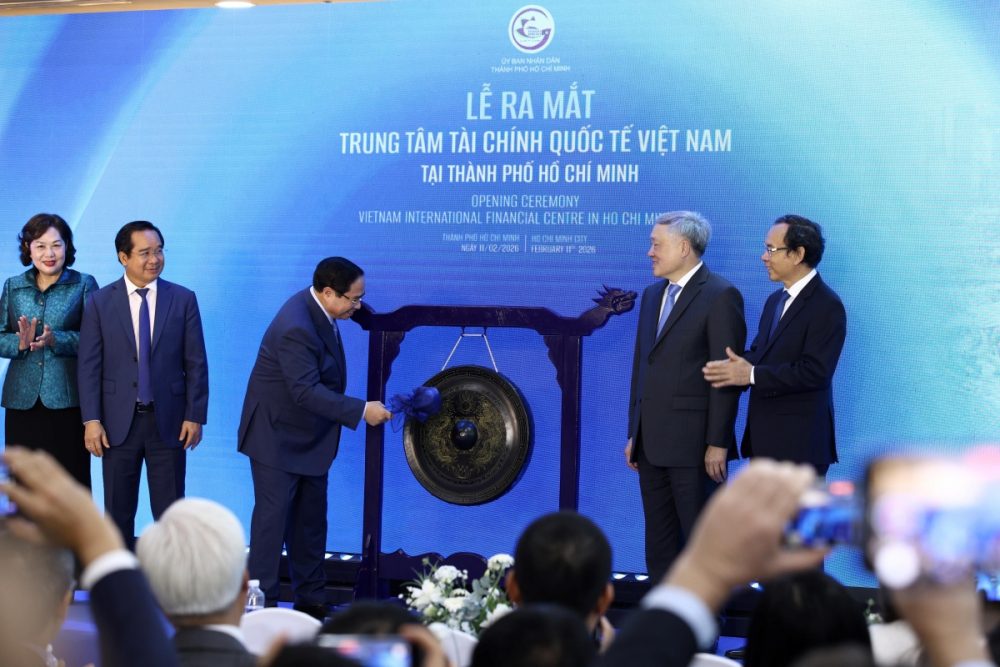
The ceremony was attended by Prime Minister Pham Minh Chinh, Permanent Deputy Prime Minister Nguyen Hoa Binh, leaders of central ministries and agencies, leaders of Ho Chi Minh City, representatives of international organisations, financial institutions, banks, investment funds and major domestic and foreign economic groups, along with many experts, scholars and members of the business community.
Speaking at the ceremony, Prime Minister Pham Minh Chinh stressed that, as the global economy undergoes strong restructuring, strategic competition intensifies and international capital tends to shift to new centres, establishing the Vietnam International Financial Centre in Ho Chi Minh City and Da Nang is an objective requirement and a breakthrough strategic step.
It is also Viet Nam’s first step towards deep, broad and comprehensive integration, combining national strength with international strength, internal with external strength, and the strength of the State with that of the private sector, creating combined resources for national development.
Viet Nam has identified two priorities: developing strategic infrastructure, foundational industries and logistics linked to green and digital transformation, trends that cannot be reversed; and providing modern financial services so that Vietnamese businesses can participate more deeply in global value chains.
According to Prime Minister Pham Minh Chinh, as domestic businesses are still limited in scale, relying on foreign investment for capital, technology and jobs is an objective reality. Integration inevitably involves trade-offs; one cannot want only gains without losses. The question is how to balance benefits and risks.
The international financial centre is not only a place where capital concentrates but also the economy’s “soft infrastructure”, playing a key role in allocating resources, providing modern financial instruments, raising national competitiveness and helping Viet Nam gradually move from being a “capital recipient” to a “market shaper”.
Mr Nguyen Van Duoc, Chairman of the Ho Chi Minh City People’s Committee, said VIFC-HCMC is not a standalone project but a long-term strategic priority for the city, linked to the aspiration to raise Ho Chi Minh City’s standing on the regional and global financial map.
The city recognises that, to remain the country’s economic locomotive and contribute more to national growth, it needs new development drivers, in which finance, capital markets and modern financial services play an especially important role.
VIFC-HCMC is designed as an open ecosystem closely tied to the real economy, directly serving the capital needs of infrastructure, industry, logistics, green transition, innovation and smart cities in Ho Chi Minh City and the whole country.
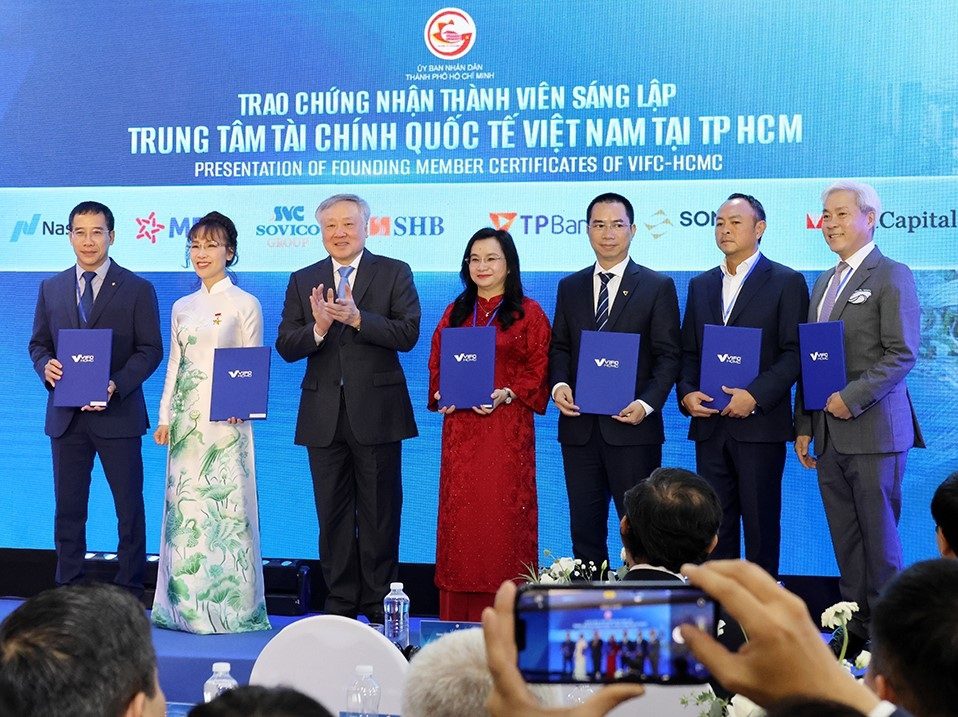
An important highlight of the VIFC-HCMC launch was the presentation of founding and strategic membership certificates to leading domestic and international organisations.
Founding members: Sovico Group; Military Commercial Joint Stock Bank (MB); Tien Phong Commercial Joint Stock Bank (TPBank); Saigon – Hanoi Commercial Joint Stock Bank (SHB); a representative of Son Kim Capital JSC; VinaCapital; Nasdaq.
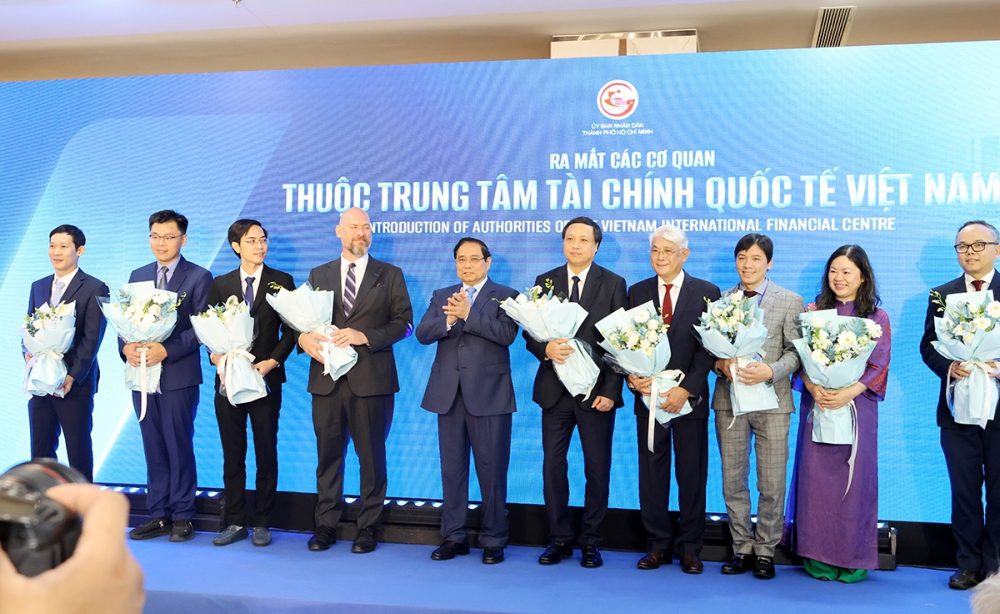
Strategic members: Nam A Commercial Joint Stock Bank (Nam A Bank), Ho Chi Minh City Finance and Investment State-owned Company, University of Economics Ho Chi Minh City, the On-chain Economy Alliance, Gemadept Group and TikTok.
These pioneering institutions, groups and organisations joined from the outset and play a core role in shaping VIFC-HCMC’s market structure, product ecosystem, high-quality workforce training, operating standards and international reputation.
A distinctive feature of the VIFC-HCMC membership model is that founding and strategic members take part not only as independent legal entities but also bring their entire ecosystems, including global customer networks, financial and technology partner systems, operating experience in major financial centres, financial capacity and risk management. These ecosystems create spillover effects, helping the Centre quickly build a deep and competitive market in the region.
At the ceremony, VIFC-HCMC announced a development model built on strategic pillars: an aviation finance centre providing capital, leasing, insurance and risk management for fleets and logistics in Asia-Pacific; a maritime finance centre linked to international trade and supply chain finance; a commodity exchange with a high-tech depository and clearing centre; a fintech and digital banking ecosystem; a value chain for green, sustainable and transition finance; and modern financial market infrastructure, moving towards international exchanges and deep financial products.
Ho Chi Minh City’s leaders stressed that the guiding principle for building and operating VIFC-HCMC is “think for real – act for real – operate for real – deliver real results”, taking practical effectiveness as the measure and avoiding models or visions that remain on paper. The Centre is therefore required to start implementation and operation immediately and deliver concrete results quickly.
After nearly 2 months of operation (from 21 December 2025), VIFC-HCMC has recorded initial foundational results: establishing an aviation finance centre with USD 6.1 billion in committed capital; developing a maritime finance centre for trade and logistics finance; mobilising USD 2 billion for smart city data infrastructure programmes and finance for the City’s development; and forming an investment fund for the on-chain economy with USD 1 billion in commitments, focused on blockchain, asset tokenisation and next-generation digital finance models. Notably, billions of US dollars in TikTok’s cross-border trade transactions are expected to be carried out through VIFC-HCMC’s interbank and financial system in the time ahead.
VIFC-HCMC has also launched its web portal, membership registration portal and a virtual assistant chatbot to support procedures and answer investors’ questions, marking the use of AI agents to serve investors and automate operating processes.
By Hoa – Diu/Economic & Financial Review