The on-chain wave is approaching
On 9 August 2025, as part of Conviction 2025, the side event “Three-Way Dialogue: On-chain Economy – Time for Viet Nam to Lead the Market” drew strong interest from blockchain communities (communities sharing knowledge about blockchain, an advanced database mechanism that enables transparent information sharing within a business network), startups and technology companies from Viet Nam and abroad. The programme was organised by On-chain Academy in collaboration with HCMC C4IR.
The event featured Mr. Pham Phu Truong, Founder and Deputy Director of HCMC C4IR; Dr. Tony Tran, Director of On-chain Economic Research at On-chain Academy; and leading figures from both Web2 and Web3. Together they discussed a big question: is this the golden moment for Viet Nam to break through in the on-chain economy?
At the event, Mr. Pham Phu Truong stressed that the global economy is changing at an unprecedented pace. Where once the companies that survived were those faster than their rivals (“fast fish eats slow fish”), now “high-tech fish will eat slow-tech fish”. Mr. Truong said blockchain has proven its advantages and is the core of the on-chain economy. The emergence of the on-chain economy will open new opportunities, not only for Web3 players, but also requiring Web2 businesses to take part and apply the technology across many sectors.
Viet Nam: An “expressway” for the digital economy
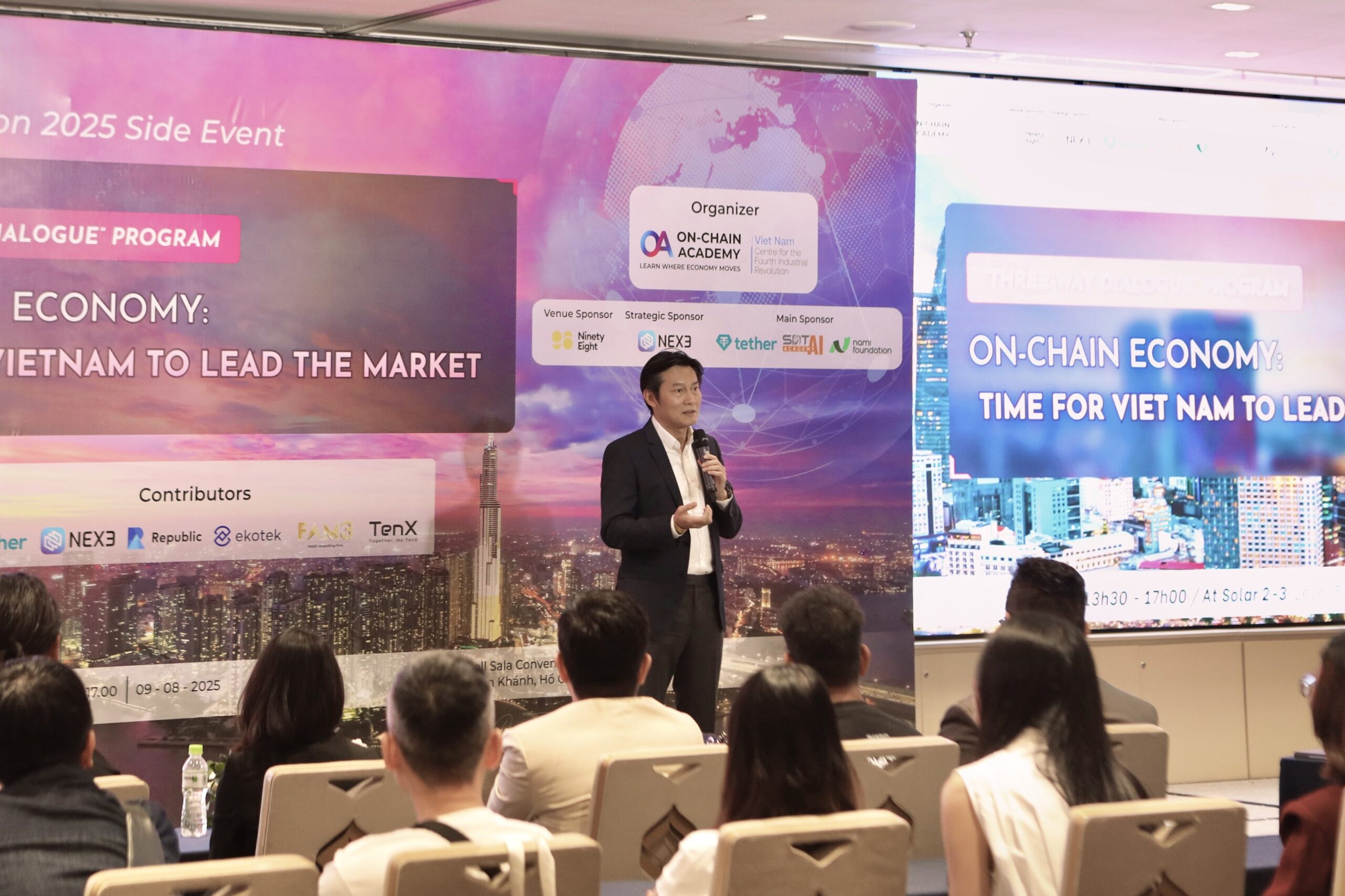
At the “Three-Way Dialogue: On-chain Economy – Time for Viet Nam to Lead the Market”, digital economy experts agreed that Viet Nam is at a “golden moment” to break through in the on-chain economy. Viet Nam has also been affirming its position as one of the pioneering countries in adopting and developing blockchain technology. In early 2025, the Government of Viet Nam named blockchain as one of its priority technologies, alongside artificial intelligence (AI).
Mr. Alex Ye, Vice President of Republic, a fast-growing financial technology company based in New York (United States), commented on the trend of tokenising assets on blockchain. In his view, this is not a futuristic concept but is gradually becoming reality in many markets.
He expressed confidence that the on-chain economy is very close, as Viet Nam has particularly favourable conditions for a breakthrough. Viet Nam has prepared early, notably with the decision to establish International Financial Centres in Ho Chi Minh City and Da Nang. According to him, these moves are like “opening an expressway for Vietnamese businesses to enter the global market”, giving Web3 and Web2 businesses in Viet Nam the momentum to leap forward, serving not only the domestic market but also reaching the world.
Sharing this view, Ms. Laura from AVAX Labs (Web3) said that Politburo Resolutions No. 57-NQ/TW and No. 68-NQ/TW show that Viet Nam is focusing on stepping up investment in science and technology, innovation and national digital transformation.
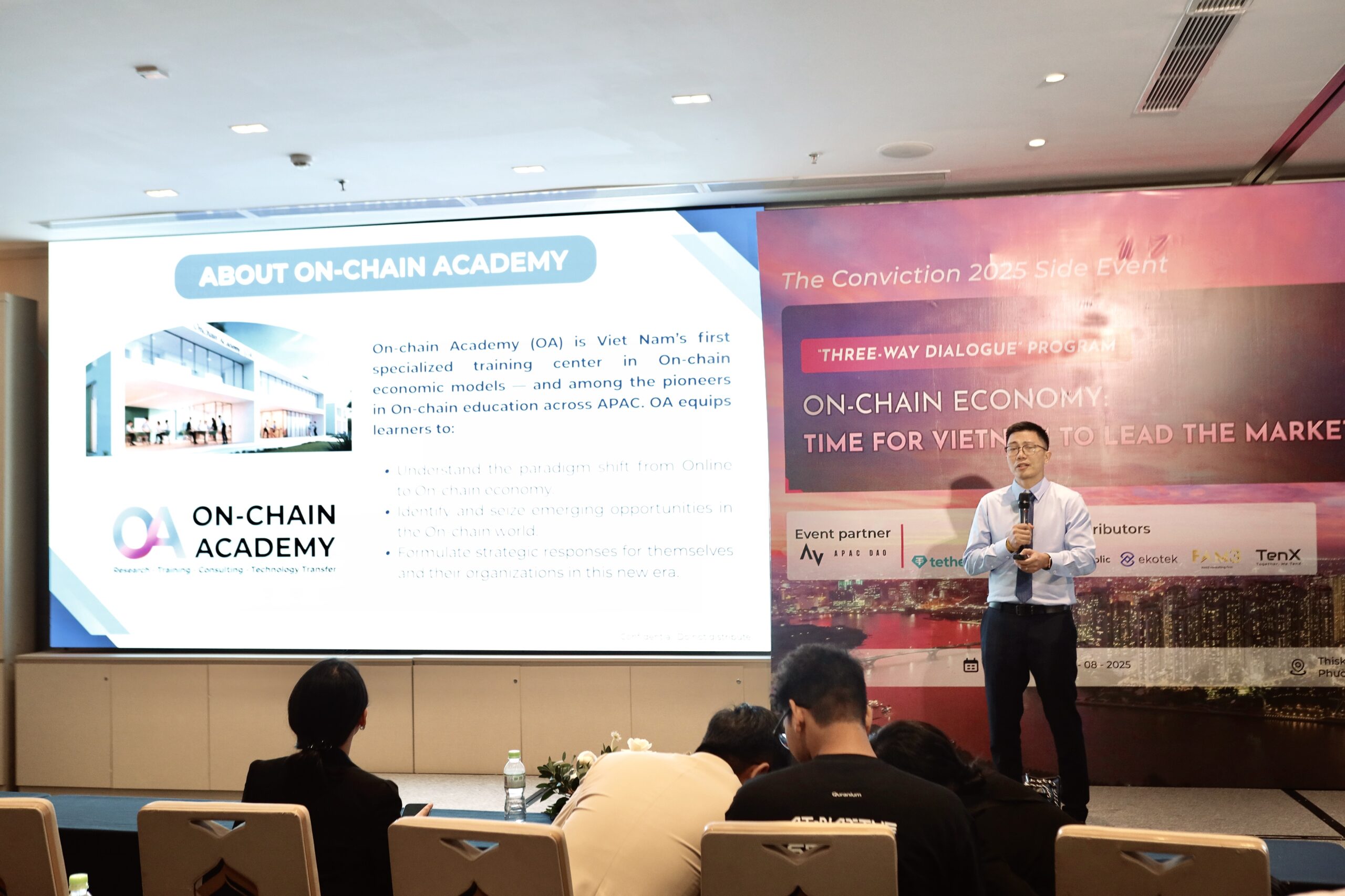
Dr. Tony Tran, Director of On-chain Economic Research at Onchain Academy (OA), added that Viet Nam is among the top three countries in the world for the number of blockchain developers and has a very high crypto adoption rate, with more than 20 million people holding digital assets.
On-chain Hub – an initiative connecting Web2 and Web3
Alongside this potential, the experts also pointed to major barriers that traditional businesses and the Vietnamese market will face in the on-chain transition.
Dr. Tony Tran frankly identified Viet Nam’s barriers in the on-chain economy. First is the complexity of the knowledge and technology involved, which requires in-house teams with an understanding of technology, finance, law and new business models. Resources are limited, the Web3 talent market is still scarce, and traditional domestic businesses lack channels to connect with the global blockchain ecosystem. In addition, a complete legal framework is essential to motivate stakeholders to take part in the on-chain economy.
To address these challenges, he proposed the On-chain Hub initiative (a community connecting global Web3 organisations with domestic Web2 businesses) working across three main strands: Education (raising awareness and building domestic capacity for businesses entering the on-chain economy); Innovation (initiatives deploying on-chain solutions with practical applications in traditional industries); and Research (joint research projects on policy frameworks, new economic models and infrastructure for the on-chain economy in Viet Nam).
Some experts also proposed building a dedicated blockchain system for operating and managing AI models in Viet Nam.
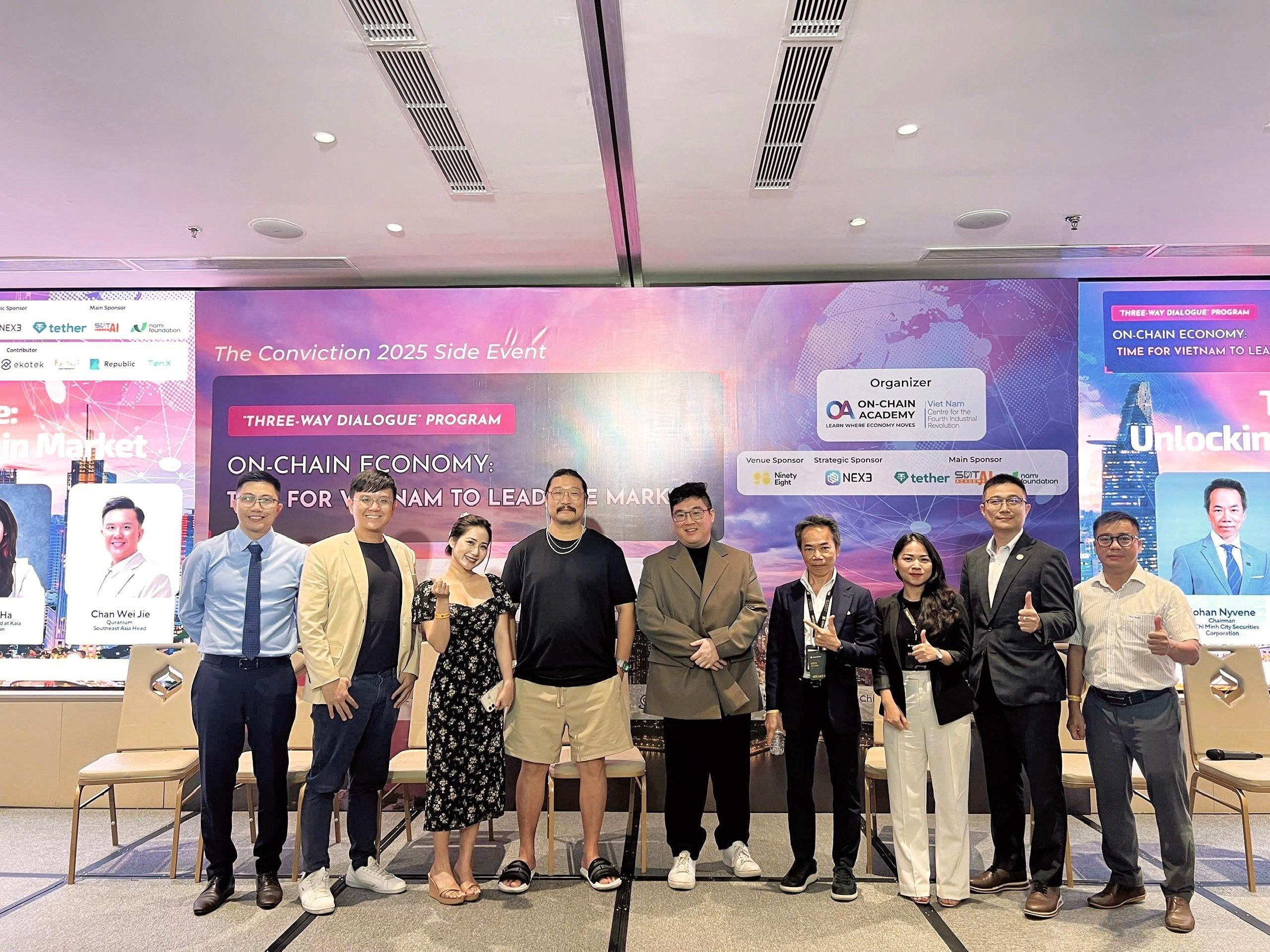
The “Three-Way Dialogue: On-chain Economy – Time for Viet Nam to Lead the Market” not only offered knowledge and multiple perspectives, but also sparked the “can-do” spirit of Viet Nam’s technology community. The event closed with a clear message: the on-chain economy is a level playing field, and Viet Nam can become a pioneer as long as we start now. The On-chain Hub initiative is expected to shorten implementation time, optimise resources and build a sustainable ecosystem.
Viet Nam C4IR