- The global digital transformation is being driven by artificial intelligence (AI), cloud computing and the Internet of Things (IoT).
- Rising global electricity demand calls for more sustainable solutions to unlock the potential of digital innovation.
- In some countries, such as Qatar, solutions are being implemented through the proactive efforts of governments, policymakers and the business community.
Half a trillion dollars was invested in data centres in 2024, and these facilities now consume around 1.5% of global electricity production. Data centre electricity consumption has grown by an average of 12% a year since 2017. By 2030 it is expected to more than double to around 945 terawatt-hours, slightly more than Japan’s current electricity consumption.
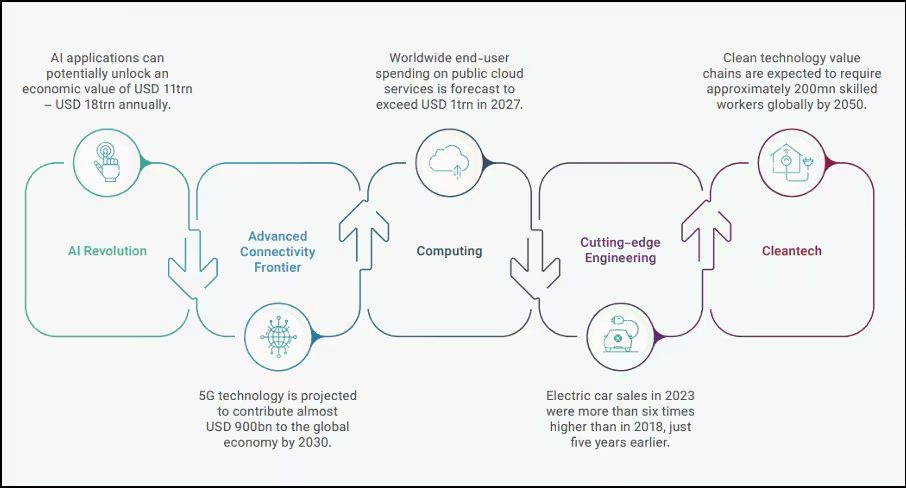
Much of this growth comes from artificial intelligence (AI). AI-optimised data centres are expected to more than quadruple their electricity consumption by 2030, as digital transformation continues to change industries around the world. Alongside cloud computing and the Internet of Things (IoT), AI is a pillar of this shift, delivering smarter systems, better decision-making and scalable solutions.
These large data centres need power and energy-efficient cooling to help connect businesses and communities better. But can we harness digital innovation without compromising sustainability? Striking a balance between innovation and responsible energy use is key to shaping a more sustainable digital future.
How AI is driving rapid growth in energy demand
AI consumes around 33 times more energy than task-specific software, and a single ChatGPT query can use 10 times as much electricity as a Google search.
Meanwhile, the rollout of 5G and the growing number of IoT devices, from smart homes to autonomous vehicles, is expected to exceed 32 billion devices by 2030. This will drive a sharp rise in electricity demand.
As digital infrastructure grows, the need for clean and renewable energy will become ever more urgent. Without strategic measures, the wave of digital services could overload power systems and slow the global transition to sustainable energy sources.
Digitalisation: a solution to the sustainability challenge
Although digitalisation increases energy demand, it can also help reduce carbon footprints and optimise energy efficiency across all consuming sectors.
In transport, for example, digitalisation makes it possible to collect, store and analyse data to improve operations, safety, service quality and efficiency. Intelligent transport systems (ITS) can help cut energy consumption by up to 25% by reducing travel demand, shifting to more energy-efficient modes and lowering energy use per kilometre travelled, according to the Invest Qatar – Iberdrola Middle East Innovation Report.
AI-powered analytics tools can also support the transition to more sustainable energy systems. They can optimise the planning and operation of generation and transmission assets, continuously balancing supply and demand to help coordinate loads such as electric vehicles, cooling and heating in real time.
Large data centres are already reducing energy waste through liquid cooling technologies and AI-driven server optimisation. In Germany, AI-powered virtual power plants can predict energy demand with up to 94% accuracy, helping the power system run more efficiently. Singapore’s 2024 Green Data Centre Roadmap builds on its 2023 energy efficiency standards to promote sustainable data centre development. As these technologies continue to evolve, they offer great potential to reduce the energy footprint of digitalisation.
Alongside deploying energy-saving technologies to curb the growth in electricity demand, investment in clean power sources, storage and, above all, upgraded transmission infrastructure needs to be planned and carried out systematically to avoid delays in rolling out data centres.
Qatar’s role in balancing digital growth
AI-powered energy solutions, smart cities and data centres can drive technological progress while honouring environmental commitments. For example, under the goals of Qatar National Vision 2030, digitalisation and economic diversification are two key factors in balancing economic development and sustainability.
Qatar’s smart city projects in Lusail and Msheireb use IoT-based energy management systems to optimise electricity use in real time. The Msheireb Downtown Doha sustainable urban regeneration project, for instance, has cut energy consumption by 30%.
Qatar is also expanding renewable energy initiatives. QatarEnergy recently announced the 2,000 MW Dukhan solar power plant, which is expected to double the country’s solar output to around 4,000 MW by 2030. This follows existing projects such as the 800 MW Al-Kharsaah solar plant, Qatar’s first large-scale plant, and two other projects in Ras Laffan and Mesaieed with a combined capacity of 875 MW.
Qatar is also working with international companies to accelerate the transition to clean energy. Since 2018, the Iberdrola Innovation Middle East team in Doha has grown more than sixfold, enabling strong development of digital solutions for sustainable energy. In 2022, an agreement with Invest Qatar further strengthened efforts to develop AI tools to optimise power grids and improve efficiency across many sectors. These solutions will be applied in many other countries, including Spain, the United Kingdom, the United States, Brazil and Australia.
A call for responsible digital development
Global digital transformation is inevitable, and the responsibility for promoting responsible digitalisation policies lies with governments, businesses and technologists. The tension between digitalisation increasing electricity consumption and its role in improving efficiency will shape the future of innovation. AI will play a central role by creating smarter systems and opening new opportunities to improve efficiency.
For innovation to truly lead to sustainable development, digital growth must go hand in hand with energy efficiency and a growing share of renewable energy. The future is digital, but it must also be sustainable.
Source: WEF