
A near future with humanoid robots
Within less than two decades, there could be billions of humanoid robots operating around the world. They will not only do the work that industrial robots do today but go much further, entering fields such as healthcare, public maintenance, retail services and personal assistance. Imagine a robot that helps you in hospital, cleans the park or even acts as your personal assistant at home.
Although humanoid robots bring many benefits to businesses and individuals alike, we need clear rules to ensure this transition is safe and effective.
How have robots changed the world?
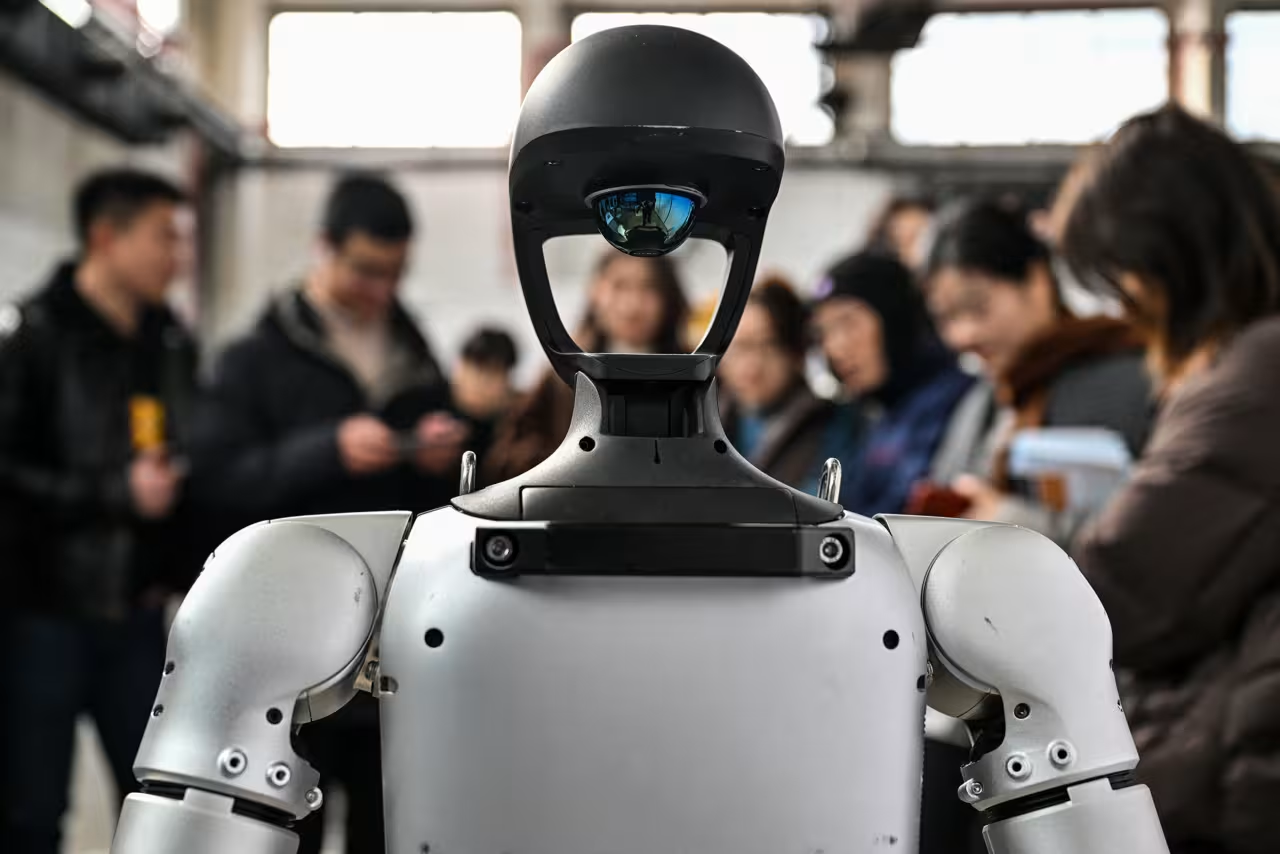
In 2017, Google’s AlphaGo computer beat the world’s top Go player, Ke Jie, sparking worldwide debate about the thinking ability of artificial intelligence (AI). More recently, humanoid robots taking part directly in a half marathon in Beijing marked a new step forward.
In the past, robots were usually demonstrated only in controlled environments. But 21 humanoid robots completing a 21 km race shows they are increasingly integrating into human life. This is similar to the rise of electric vehicles (EVs), which shook the traditional automotive industry in places such as Germany. Could humanoid robots reshape global markets and industries in a similar way?
Humanoid robots are changing industries
As the name suggests, humanoid robots are machines shaped like humans that mimic the movements of the human body. They are designed to work alongside people, increasing productivity in many different environments.
Powered by advanced AI, these robots can “understand” their surroundings, make decisions, plan and carry out complex tasks autonomously. Thanks to their ability to learn and adapt quickly, humanoid robots are developing at a dizzying pace.
Experts predict that humanoid robots will become common in our daily lives within the next decade. There could be billions of robots operating worldwide by 2040, performing tasks far beyond the capabilities of today’s factory robots, from healthcare and public space maintenance to retail services and personal assistance.
Major organisations such as Goldman Sachs forecast that the humanoid robot market could reach $38 billion by 2035, while Fortune Business Insights is even more optimistic, estimating the market could grow by nearly 50% a year to reach $66 billion by 2032.
The technology behind humanoid robots
The versatility of humanoid robots depends on a complex supply chain spanning many industries, including semiconductors (computer chips), AI systems, actuators (which convert energy into motion) and sensors. These robots need large numbers of high-performance chips to control movement, perception and decision-making. This means the chip industry will grow strongly as the humanoid robot market expands.
At the same time, advances in AI have brought humanoid robots out of the laboratory and into the market, attracting great interest in the technology world. High-profile projects such as Tesla’s Optimus, Figure AI (backed by OpenAI) and the humanoid robots of Unitree Technology have accelerated commercialisation and mass production, bringing machines once seen only in science fiction closer to everyday life.
As humanoid robots become more widespread, the global workforce will face both change and new opportunities. Society will need to develop new policies and address ethical and economic impacts. This fast-developing technology promises an exciting but complex future, with expanding applications driving market growth.
Although some worry that robots may replace jobs or make us too dependent on technology, workers can also benefit. Robots can complement human abilities, making work more efficient and interesting, and improve workplace safety by taking on dangerous tasks.
In addition, companies can improve customer experience, and new roles will emerge, such as training, supervising and collaborating with robots, ensuring that people remain an indispensable part of the future workforce.
The global humanoid robot race is heating up
Breakthroughs in generative AI have strongly accelerated the development of humanoid robots, and the momentum shows no sign of slowing. Leading this global race are companies from China and the United States, which dominate both the AI market and humanoid robot innovation.
According to the Stanford AI Index Report, the vast majority (83%) of AI intellectual property and 90% of notable foundation AI models come from China and the United States, followed by France with 5%. This means these robots come almost exclusively from China or the United States.
Amid fierce competition between the US and China in this revolutionary field, China’s rapid rise is particularly notable. Market forecasts show China’s humanoid robot market is expected to surge from 2.76 billion yuan ($377.56 million) in 2024 to 75 billion yuan ($10.26 billion) in 2029.
This would account for nearly a third (32.7%) of the global market, consolidating China’s world-leading position. The growth is driven by a powerful combination of supportive government policies, world-class infrastructure and leadership in patent filings: China has registered 5,688 humanoid robot patents over the past five years, almost four times the 1,483 patents filed in the United States.
Recent developments, such as Chinese robots taking part in a marathon, show that the country is not only competing but setting the pace in this trillion-yuan technology race, once again reshaping an industry. Besides pioneering new fields, China is now challenging industrial leaders such as the Republic of Korea, Germany and the United States in real-world applications.
The road ahead for humanoid robots
Humanoid robots are poised to revolutionise how work is done across many sectors. In hazardous industrial operations, robots can take on high-risk tasks, reducing danger to people and significantly cutting workplace accident rates.
At the same time, in services that require personalised care (such as elderly care and customer interaction), they offer scalable solutions to labour shortages while providing personalised companionship. This dual capability is especially important for rapidly ageing societies, including Germany, Japan, the Republic of Korea and China, where demographic pressures add to workforce challenges.
In the future, humanoid robot systems from many manufacturers and countries will operate seamlessly in shared environments, driving sustainable growth through harmonised digital ecosystems.
Amazon’s deployment of robots, with around 750,000 robots of nine specialised types working in coordinated systems to support packing and delivery, gives a clearer picture of how humanoid robots might be applied.
The company is now going further by testing humanoid robots for last-mile delivery to customers, deploying them alongside human drivers to serve several addresses at once. Although still in testing, these experiments aim to show that robots can handle real-world situations, complementing rather than fully replacing the human role in the near term.
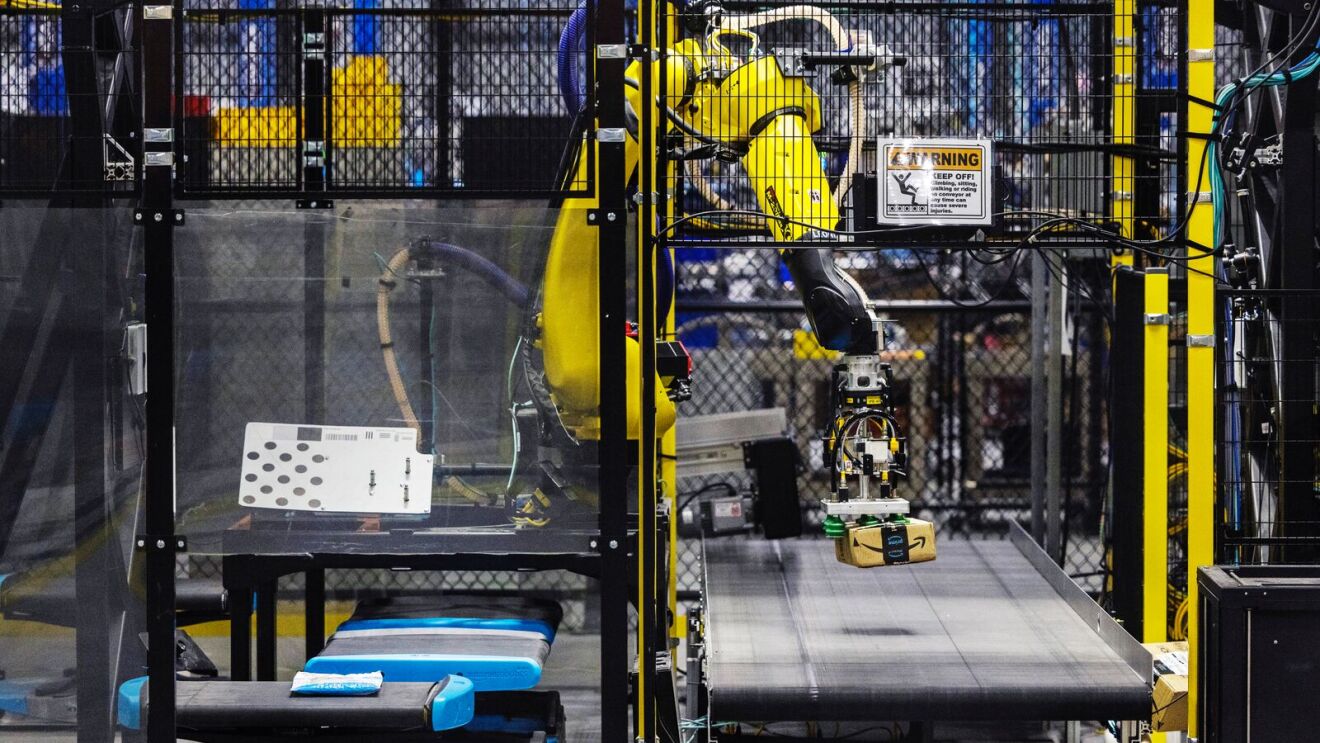
Seamless collaboration between robot ecosystems is not just about technical compatibility; it could also reshape how industries harness global innovation. These connected systems could lay the foundation for a new era in which AI-driven robots become a widespread multiplier of productivity.
“Guardrails” are needed for the development of humanoid robots
However, we cannot ignore the challenges, including privacy and data risks, reliability issues, the risk of job losses and the related economic impacts.
More fundamentally, technology’s greatest promise lies in its ability to drive social progress and improve human lives, a promise perfectly embodied in humanoid robots. These technological marvels are already revolutionising industries, from dangerous tasks in harsh environments to close roles in the home and online delivery.
Yet society and industry will need clear “guardrails” to embrace this transition. Because humanoid robots can navigate their environments autonomously, they must comply with social norms and ensure safe, ethical and predictable behaviour, especially in personal spaces.
Fail-safe mechanisms are essential to avoid the catastrophic scenarios often seen in Hollywood films and science fiction. Implementing them requires coordination from many sides: engineers designing technical safeguards, corporations operating safety procedures and governments setting legal frameworks. Finally, people also need training on how to use and interact with humanoid robots safely.
Humanoid robots are no longer a fictional concept; they are here, and their social and industrial impact will be enormous. Rather than being passive observers, we must learn to collaborate with them. Companies and individuals alike can benefit greatly from bringing humanoid robots into manufacturing, services, professional work or even their daily lives.
Source: WEF