ActivitiesInternational cooperationHo Chi Minh City strengthens global partnerships at Davos 2026

Ho Chi Minh City strengthens global partnerships at Davos 2026

Davos, Switzerland, January 2026 – Within the framework of the 56th Annual Meeting of the World Economic Forum (WEF) in Davos-Klosters, Switzerland, the Ho Chi Minh City delegation organized a series of important side activities aimed at strengthening dialogue, networking, and promoting international cooperation in the fields of innovation, science and technology, and digital transformation.

In the alpine setting of Davos, Switzerland, Ho Chi Minh City made its case to become a major player in Southeast Asia’s financial and technology landscape.

In the framework of the World Economic Forum’s 56th Annual Meeting side events, the Vietnamese delegation – led by Vice Chairman of HCMC People’s Committee Hoang Nguyen Dinh – orchestrated two pivotal events that signal the city’s ambitions to transform into an international finance hub powered by technology and innovation.

Building the fintech ecosystem through strategic partnerships

The Business Networking programme brought together domestic financial institutions, innovation centres, and international partners to advance Vietnam’s finance-technology ecosystem.

Two concrete partnerships emerged: the Global On-chain Economy Alliance signed MOUs with Crystal Intelligence for cross-border payment infrastructure development and with Sumsub for cryptocurrency payment solutions. These agreements reflect growing international confidence in Ho Chi Minh City’s potential to establish a modern financial centre.
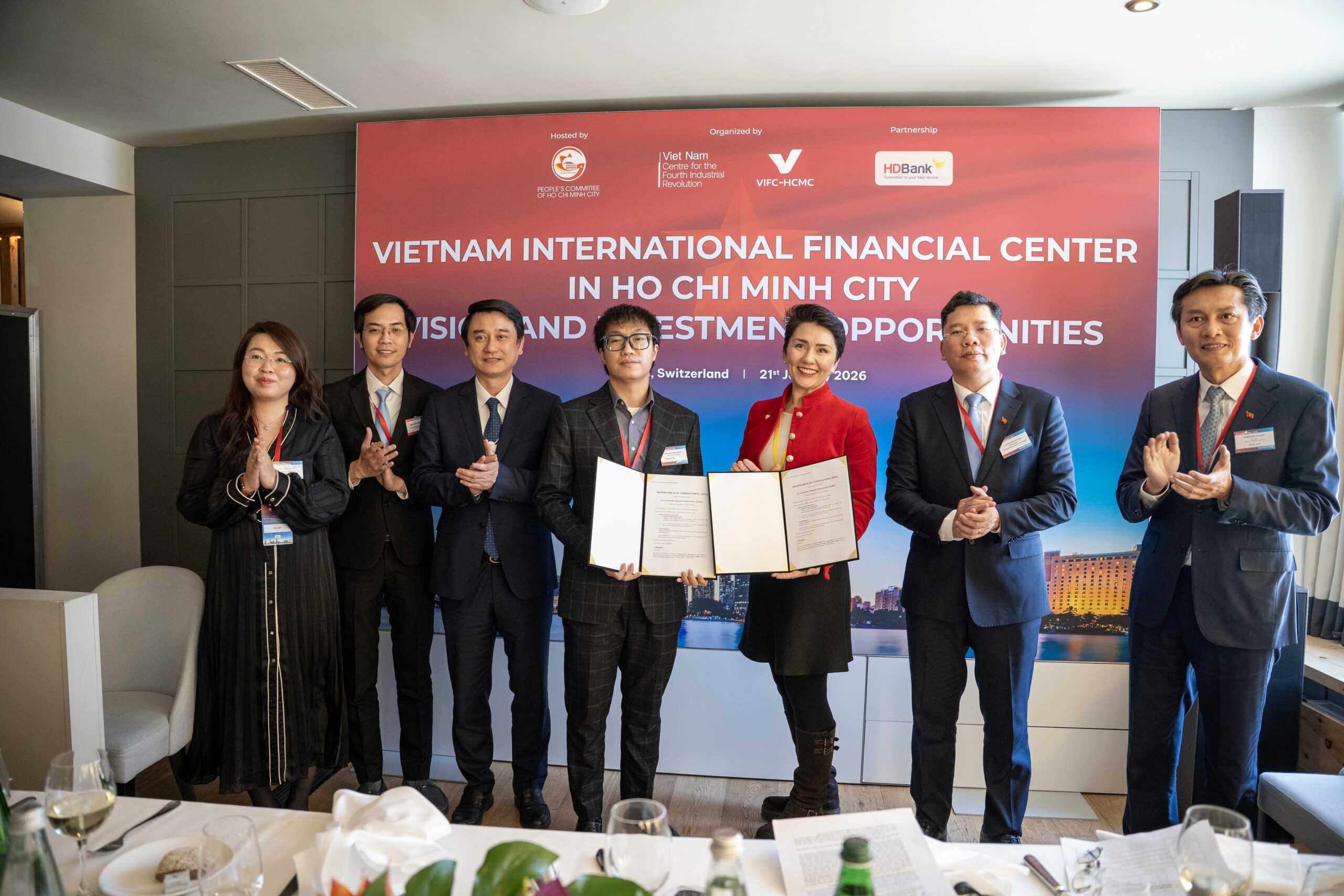
The parties announced the Cooperation Agreement at the City's event on January 21st. (Photo: HCMC C4IR).
The parties announced the Cooperation Agreement at the City’s event on January 21st, 2026 (Photo: HCMC C4IR).

The partnerships address critical infrastructure gaps in international payments while positioning the city to participate in the digital asset economy – areas identified as key pillars for the planned International Financial Centre.

A vision for Vietnam’s International Financial Centre

The centrepiece working lunch, themed “Vietnam’s International Financial Centre in Ho Chi Minh City – Vision and Investment Opportunities,” outlined the city’s strategic roadmap.
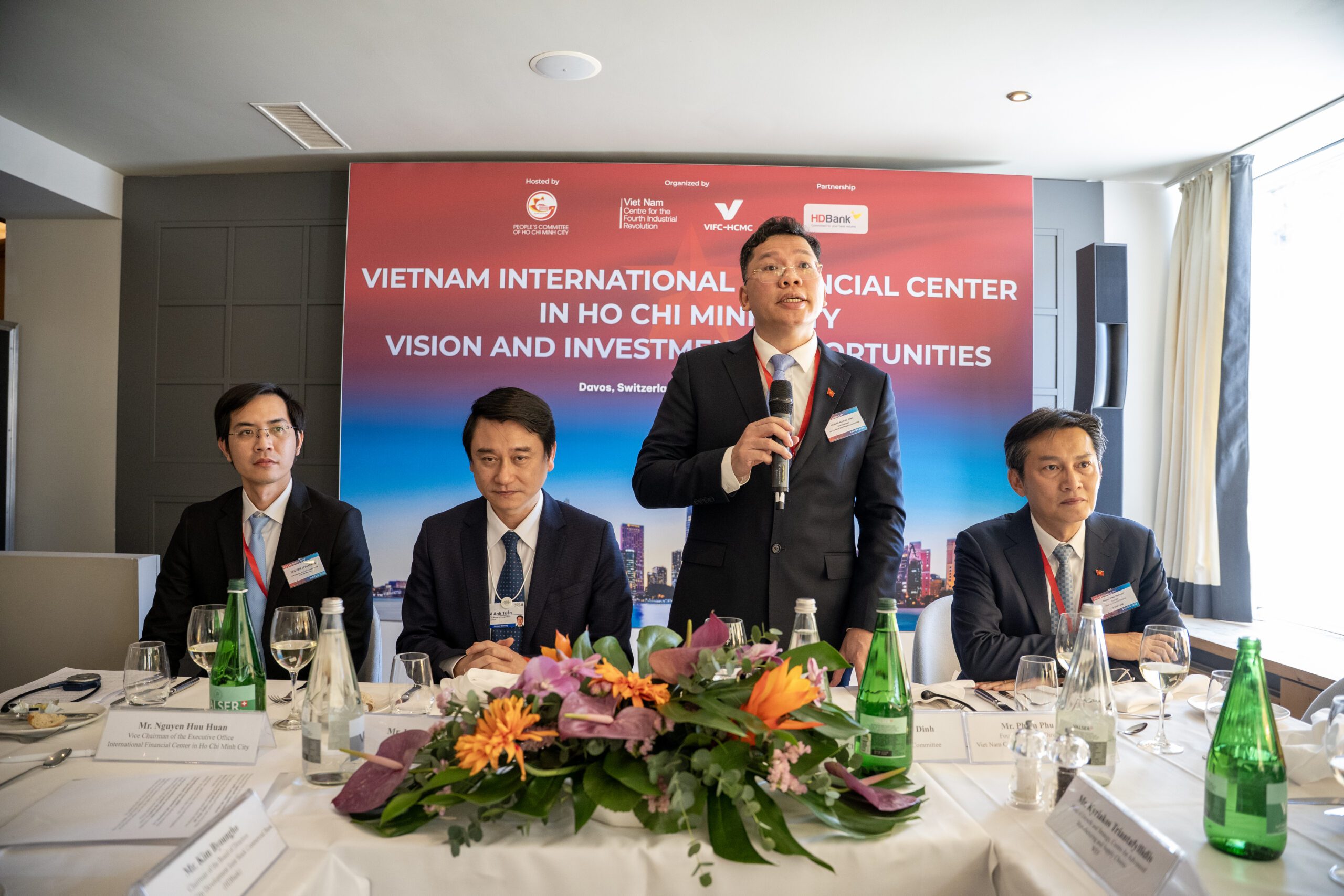
Vice Chairman of HCMC People's Committee Hoang Nguyen Dinh speaks at the working lunch on January 21, 2026 in Davos, Switzerland (Photo: HCMC C4IR).
Vice Chairman of HCMC People’s Committee Hoang Nguyen Dinh speaks at the working lunch on January 21, 2026 in Davos, Switzerland (Photo: HCMC C4IR).

The vision centres on creating a modern, transparent financial-technology ecosystem where science, data, artificial intelligence, and fintech serve as foundational pillars. City representatives emphasized the role of public-private partnerships and regulatory sandbox mechanisms to enable innovation while maintaining system stability.

From investor destination to innovation partner

Deputy Minister of Foreign Affairs Le Anh Tuan articulated Vietnam’s approach: the country seeks to attract global financial institutions and corporations not merely as investors, but as strategic partners who will help build a next-generation International Financial Centre model.
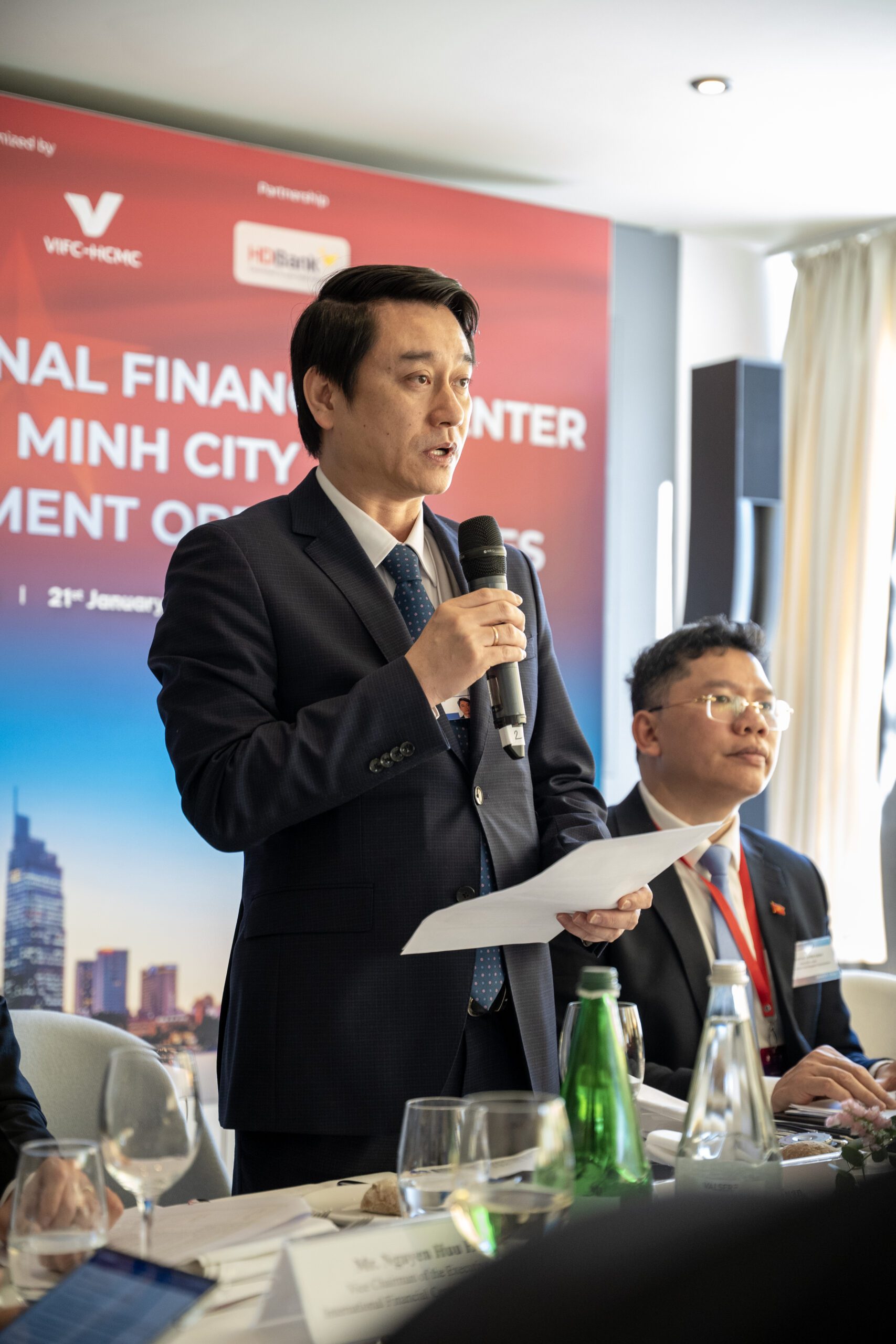
Deputy Minister of Foreign Affairs Le Anh Tuan delivered a speech outlining the direction for attracting investment and strategic cooperation for the International Finance Center in Ho Chi Minh City (Photo: HCMC C4IR).

The presence of Vietnamese embassy representatives in Switzerland and the Permanent Mission in Geneva underscored the national-level commitment behind this city initiative.

What makes a successful international finance centre?

Dialogue at the event revealed consensus around three critical elements: innovation, international governance standards, and global financial system connectivity.

Participants emphasized the importance of controlled testing environments that balance flexibility for innovation with investor protection and market confidence. The discussions focused on creating practical frameworks rather than theoretical models.

Banking sector perspective: Beyond preferential zones

Representatives from Ho Chi Minh City Development Commercial Joint Stock Bank (HDBank) offered a compelling framing: the International Financial Centre should function as a new institutional platform, not merely a preferential zone.
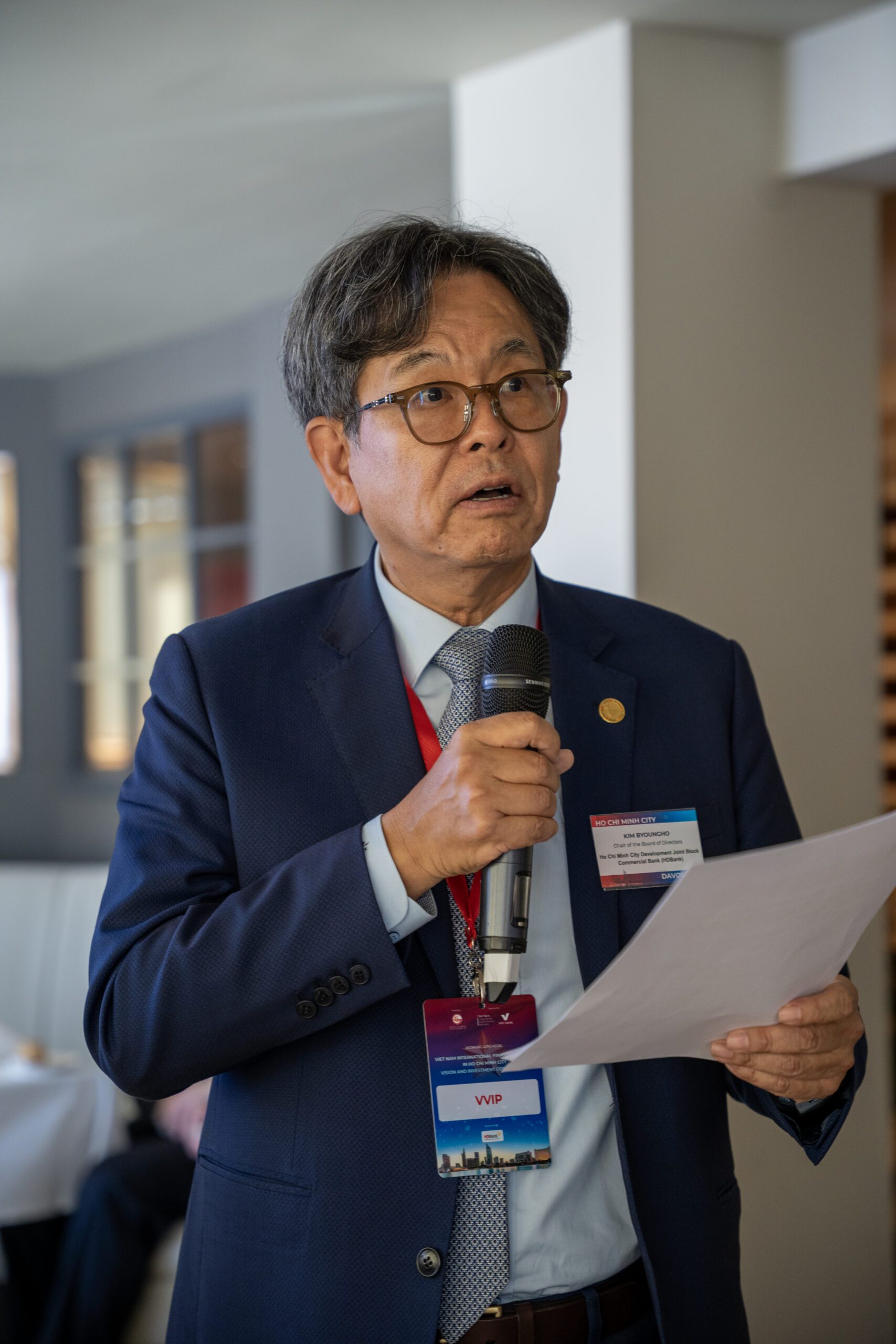
Representative from HDBank affirmed their commitment to partnering with Ho Chi Minh City in operating the International Financial Center according to international standards (Photo: HCMC C4IR).

This platform would enable testing of financial products, elevate governance standards to international norms, and strengthen connections to global capital markets. HDBank committed to participating in controlled testing mechanisms while ensuring financial stability, risk management, and compliance with international standards.

What’s next for Ho Chi Minh City?

The Davos delegation included leadership from the Department of Foreign Affairs, the Centre for the Fourth Industrial Revolution in Ho Chi Minh City (HCMC C4IR), the Vietnam International Financial Centre, alongside representatives from HDBank, TTC AgriS, Exabyte, Sky Mavis, and Tether – reflecting the city’s strengths across finance, fintech, and technology sectors.

The visit and side events at the 56th WEF Annual Meeting in Davos are expected to enhance Ho Chi Minh City’s image and position on the global economic and financial map. These activities aim to create an important foundation for attracting international resources, promoting long-term cooperation, and supporting the city in achieving its goals of rapid and sustainable development in the coming period.

Related

Latest

Vietnam - Singapore Semiconductor Industry Development Cooperation Forum 2026: Connecting the value chain, expanding investment opportunities, and developing human resources

On July 21, 2026, the Vietnam – Singapore Semiconductor Industry Development Cooperation Forum 2026 will take place at the QTSC Building 1 Hall, Quang Trung Software City, Ho Chi Minh City. The Centre for the Fourth Industrial Revolution in Ho Chi Minh City (HCMC C4IR) will participate as a co-organizer and deliver a presentation at the Forum.

Hội tụ công nghệ: Vì sao doanh nghiệp cần bản đồ chiến lược

Các doanh nghiệp hiếm khi đánh mất lợi thế cạnh tranh chỉ vì một công nghệ mới ra đời. Sự tụt hậu thường bắt nguồn từ một điểm mù: họ không lường trước được sức mạnh khi các công nghệ tưởng chừng rời rạc bắt đầu tích hợp với nhau.

Báo cáo Hội tụ công nghệ 2026 của WEF: Khi sở hữu công nghệ không còn là lợi thế cạnh tranh cốt lõi

Diễn đàn Kinh tế Thế giới (WEF) phối hợp cùng Capgemini vừa công bố ấn bản thứ hai của báo cáo Technology Convergence: The New Logic for Competitive Advantage (tháng 4/2026). Nếu ấn bản 2025 tập trung nhận diện các tổ hợp công nghệ, thì ấn bản năm nay giải quyết một bài toán chiến lược phức tạp hơn: cách thức chuyển hóa tổ hợp công nghệ thành một hệ thống vận hành thực tế ở quy mô lớn.

Ho Chi Minh City affirms its position at the 17th Annual Meeting of the New Champions (AMNC 2026) of the World Economic Forum in Dalian, China

At the invitation of the World Economic Forum (WEF), a delegation led by Mr. Nguyen Loc Ha, Permanent Vice Chairman of the Ho Chi Minh City People's Committee, attended the 17th Annual Meeting of the New Champions (AMNC 2026) in Dalian, China, from June 22 to 26, 2026. This trip not only affirmed the growing role of HCMC in the global innovation ecosystem but also left a significant mark through highly effective multilateral diplomatic activities and investment promotion.

[Collaboration Days 2026 Highlight] Professor Wesley Rosslyn-Smith shares insights on shifting trends in advanced manufacturing supply chains

Establishing cross-border collaboration models to deepen Ho Chi Minh City’s integration into global value chains was the pivotal theme discussed at the Working Luncheon titled “Connected Global Value Chains in the Next Industrial Era.” At the event, Prof. Wesley Rosslyn-Smith, Director of the South African Centre for Industry and Technology (SACIT), provided profound analyses on the core conditions international investors look for when shifting capital flows.