
In a context where the world is seeking solutions to deploy innovation at scale responsibly, Mr. Eisaku Ito, President and CEO of Japan’s leading heavy industry group, Mitsubishi Heavy Industries (MHI), shared profound insights at the World Economic Forum (WEF) on how to "wield AI with responsible hands."
The Distinction of AI in the Manufacturing Sector
AI is reshaping the operational methods of global industries. However, the majority of current discussions tend to revolve around Large Language Models (LLMs) and their impact on white-collar work.
For manufacturers, the perspective is distinctly different. While the potential for productivity gains is immense, the application of AI in industrial manufacturing poses complex challenges: How can we place absolute trust in algorithms when they control critical infrastructure involving human lives? How safe is it to share proprietary knowledge with partners across the supply chain?
At Mitsubishi Heavy Industries (MHI), we identify resolving these challenges as a prerequisite, not only for corporate benefit but also for the sustainable development of society.
Immense Potential for Productivity
In reality, AI is not entirely new to advanced manufacturers. If AI is defined as the collection of big data and the use of algorithms to derive insights, many enterprises have been implementing this for years to optimize production and support customers in equipment operation.
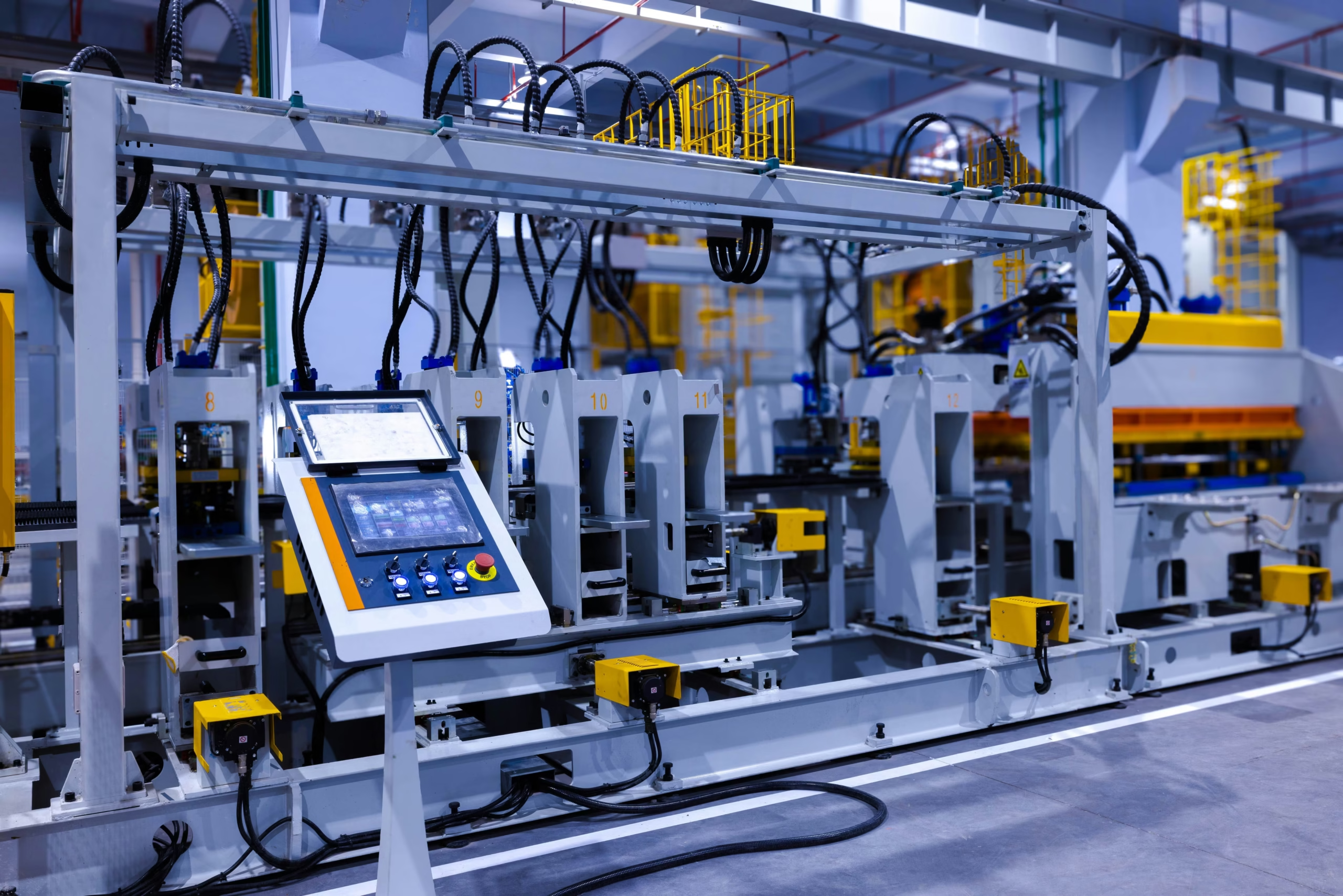
At MHI factories, AI is currently utilized to automate processes, enhance the intelligence of robots and machine tools, and ensure consistency in quality control.
The opportunity to advance further remains vast, typically in welding techniques—a core process for assembling gas turbines, ships, or nuclear reactors. This is a skill requiring a high level of finesse, where skilled craftsmen use a "sixth sense" to create the perfect weld. We are digitizing this process by recording the movements of welders to train AI. The goal is to combine human skill with machine stability, while simultaneously moving workers from hazardous environments to safer positions.
Furthermore, we are developing algorithms for Operational Technology (OT) systems. Every gas turbine sold is integrated with the capability to detect the slightest anomalies, allowing for maintenance forecasting weeks before a breakdown occurs.
Challenges in Security and Data Reliability
No matter how powerful, AI is ultimately just a tool. Competitive advantages derived from AI can erode quickly if businesses do not know how to combine it with human experience and skills to create solution packages that are difficult to replicate.
A greater concern is the reliability of algorithms. AI models trained on third-party data sometimes fail to produce accurate or reproducible results. The best results often come from training on internal data, but the challenge lies in whether that volume of data is sufficient.
The issue of proprietary data security is also a major barrier in establishing intelligent supply chains. Although the trend of investing in massive data centers (hyperscalers) is rising, many manufacturing companies still wish to strictly control their own data. This may drive demand for "edge data centers" located right on factory premises—a high-potential market that MHI is targeting.
Maintaining the "Monozukuri" Spirit and Human Skills
The most significant concern for the manufacturing industry today is that the AI boom is draining resources away from the development of physical manufacturing technologies. More students are pursuing software and algorithms, while courses on hardware and craftsmanship skills—or the Japanese spirit of "Monozukuri" (the art of making perfect products)—are lacking learners.
AI has the potential to powerfully transform the manufacturing industry, but it needs to be viewed as a support tool rather than a complete replacement for the human role. For AI to truly deliver a positive impact, it must be wielded by thoughtful, responsible hands that always respect the value of craftsmanship.
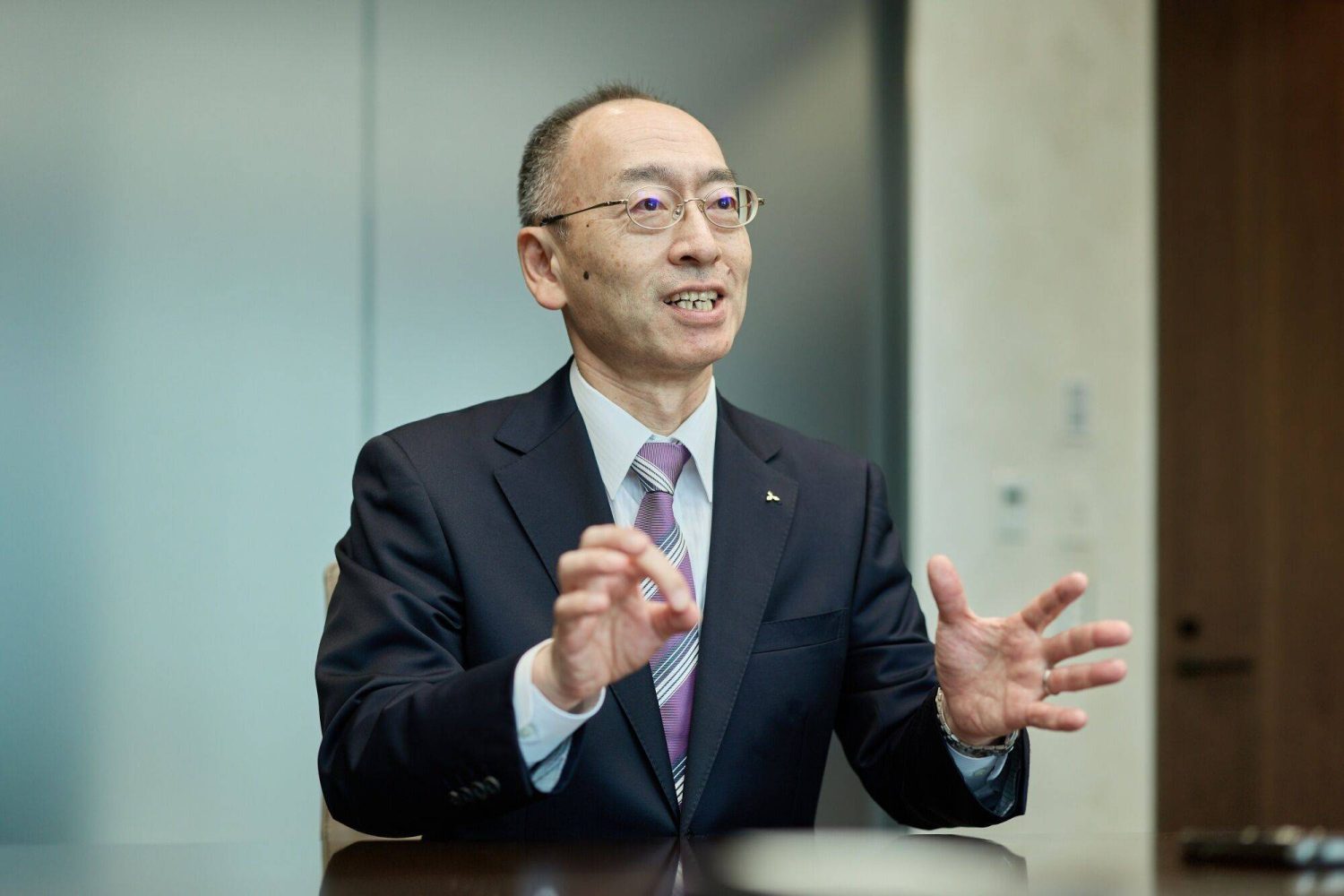
Mr. Eisaku Ito President & CEO, Mitsubishi Heavy Industries (MHI), Japan