At its core, the 4IR focuses on connectivity, automation, machine learning and real-time data. It blurs the boundaries between fields, allowing physical and digital systems to interact seamlessly, creating “smart factories” and highly optimised production processes. The goal is not only to raise production efficiency but to revolutionise how entire businesses and societies operate and develop.
Historical development and key milestones across the eras
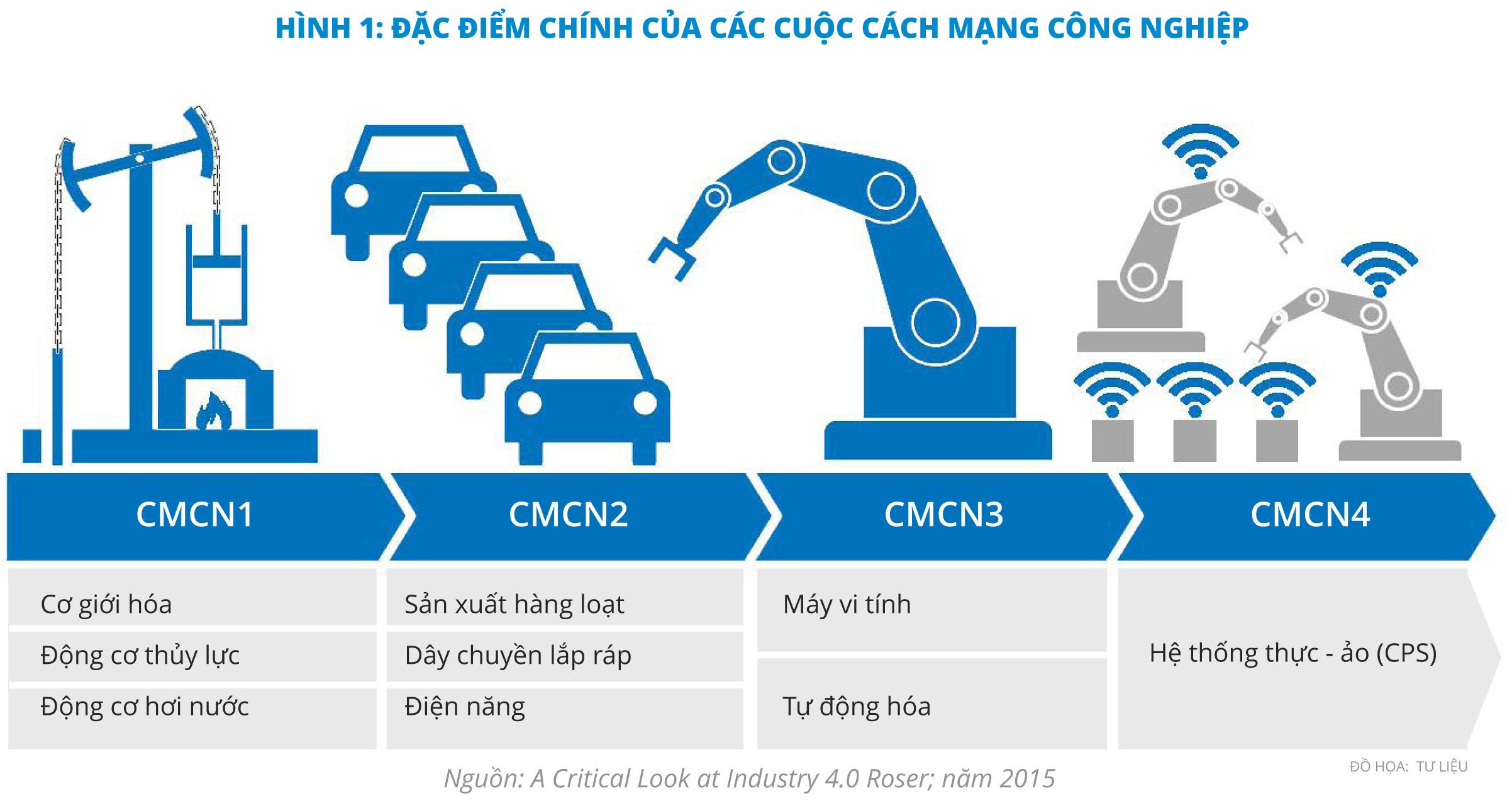
The 4IR is a continuous evolution from earlier industrial revolutions:
The First Industrial Revolution (late 18th – early 19th century)
- Period: About 1784 – 1840.
- Key feature: Mechanisation of production.
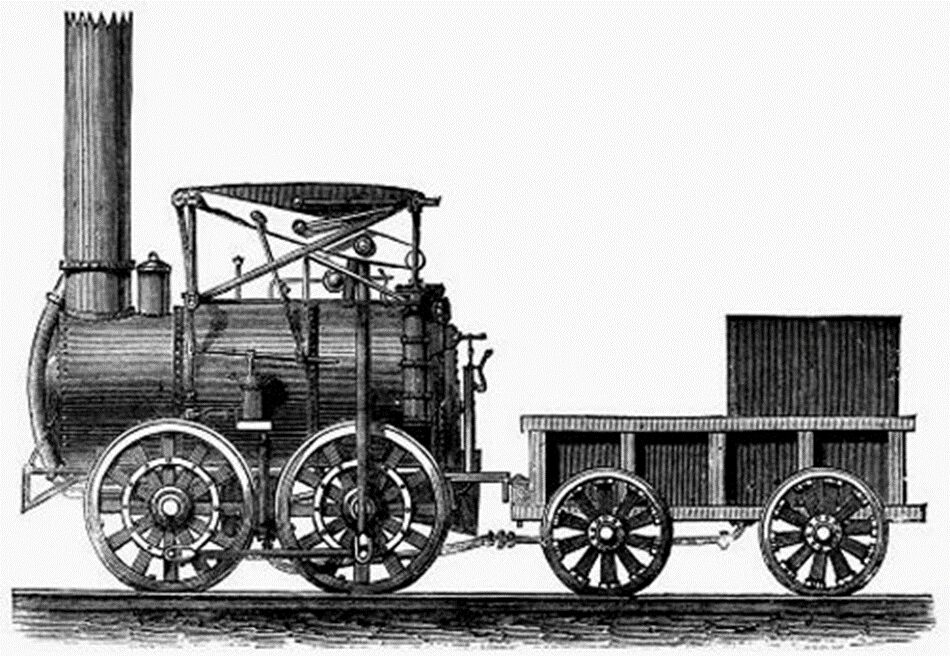
- Core technology: The steam engine.
- Impact: A shift from an agricultural to an industrial economy, higher labour productivity, and the emergence of centralised factories.
The Second Industrial Revolution (late 19th – early 20th century)
- Period: About 1871 – 1914.
- Key feature: Mass production and electrification.
- Core technology: Electricity and the assembly line (Henry Ford).
- Impact: Larger production scale, lower product costs, wider markets and faster urbanisation.
The Third Industrial Revolution (from the 1970s)
- Period: About the 1970s – early 21st century.
- Key feature: Automation based on information technology.
- Core technology: Personal computers, the Internet, software, robotics.
- Impact: Greater automation in production, higher productivity, new industries such as software and IT services, and changes in how information is transmitted and received. However, it also began to raise employment challenges due to automation.
The Fourth Industrial Revolution (from 2011)
- Period: From 2011 (introduced at the Hannover Messe world industrial fair in Germany).
- Key feature: The convergence of digital, physical and biological technologies, creating smart, self-regulating systems.
- Core technology: IoT, AI, Big Data, Blockchain, 3D printing, Virtual/Augmented Reality (VR/AR), Cloud Computing, Robotic Process Automation (RPA), biotechnology and new materials.
- Impact: Deep transformation of every aspect of life, from smart manufacturing, the digital economy, healthcare and education to social governance. It creates new business models and strengthens competitiveness, but also poses major challenges for the labour market, cybersecurity, technology ethics and the gap between rich and poor.
Core technologies of the 4.0 era
Among the many technologies of the 4IR, the main pillars include:
1. Internet of Things (IoT)
IoT is a network of physical devices, vehicles, household appliances and other objects equipped with sensors, software and other technologies that allow them to connect and exchange data with other devices and systems over the internet. What sets it apart is the ability to collect, send and receive data without human intervention. Data from IoT creates “big data”, the foundation for AI and Machine Learning.
2. Artificial Intelligence (AI) and Machine Learning
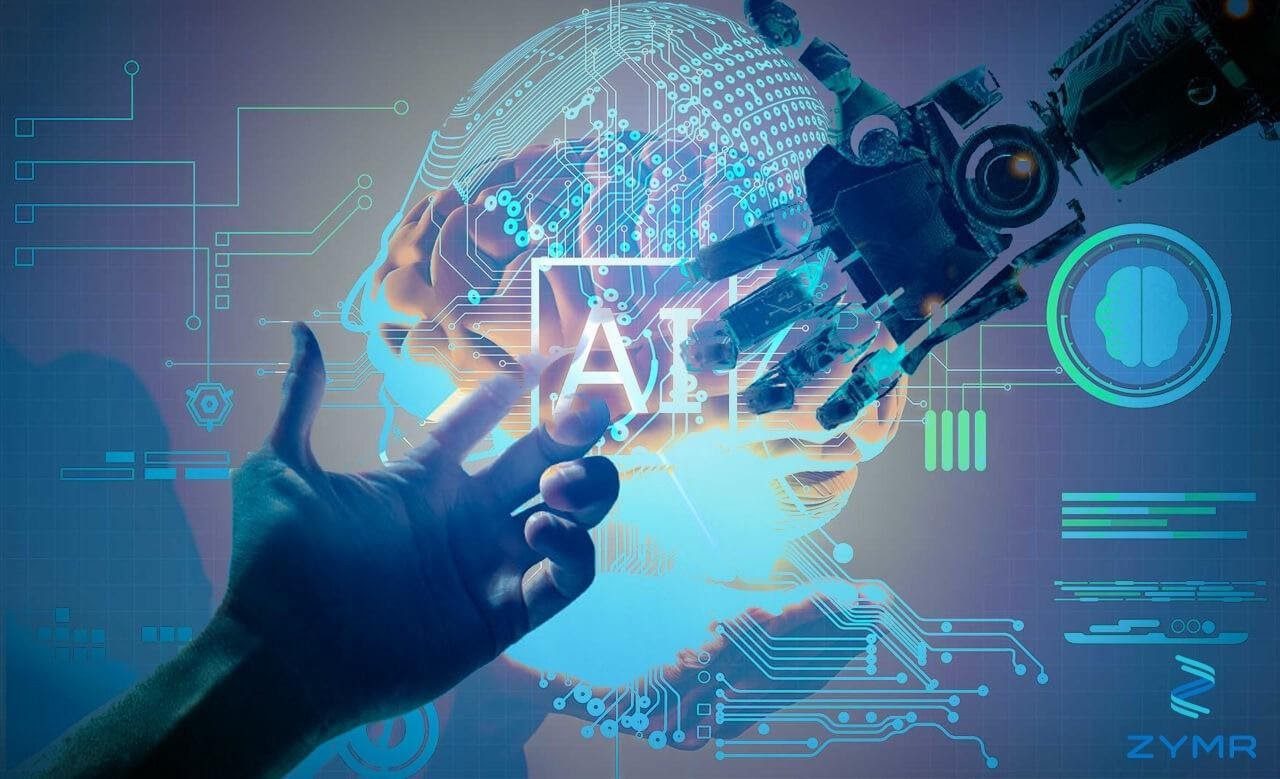
- Artificial Intelligence (AI): The ability of machines to perform human-like cognitive functions such as learning, reasoning, problem-solving and understanding language.
- Machine Learning (ML): A branch of AI that allows systems to learn from data without being explicitly programmed. ML helps AI improve its performance over time by recognising patterns and making predictions or decisions based on what it has learned. AI and ML are key to analysing Big Data, automating complex processes and making smart decisions across many fields.
3. Big Data and data analytics
Big Data refers to huge, complex, high-velocity datasets that traditional data processing methods cannot handle effectively. It is characterised by the 3Vs:
- Volume: The enormous amount of data generated every second from countless sources.
- Velocity: The near real-time speed at which data is generated, collected and processed.
- Variety: Data comes in many different formats (text, images, video, sensor readings, etc.).
Big Data analytics helps organisations extract valuable information, recognise trends, predict behaviour and make strategic decisions.
4. 3D printing (Additive Manufacturing)
3D printing creates three-dimensional physical objects from a digital model by stacking layers of material. Its key advantage is the ability to produce customised, complex products quickly and cost-effectively, without traditional moulds. It is revolutionising supply chains and opening up the possibility of distributed manufacturing.
5. Blockchain technology
Blockchain is a distributed, secure and immutable ledger that records transactions transparently without a central third party. The technology ensures data integrity and reliability, with wide applications from finance (cryptocurrencies, smart contracts) to supply chain management, healthcare and data privacy.
6. Other technologies
- Cloud Computing: Provides computing resources (servers, storage, databases, networking, software, analytics) over the Internet. It is the foundation for storing and processing Big Data and for deploying AI and IoT applications.
- Virtual Reality (VR) and Augmented Reality (AR): VR creates a fully simulated environment, while AR overlays digital information onto the real world. They are used in training, product design, maintenance, tourism and entertainment.
- Robotic Process Automation (RPA): Software robots programmed to automate repetitive, rule-based tasks, improving efficiency and reducing errors in business processes.
Impact of the Fourth Industrial Revolution
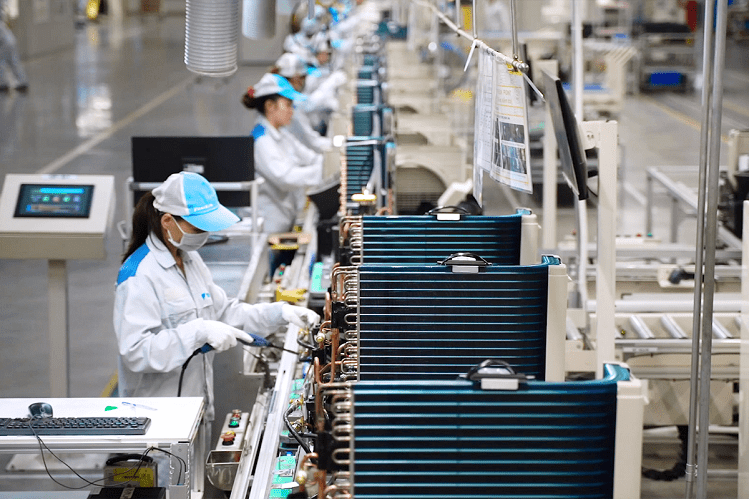
The 4IR brings both opportunities and challenges:
Opportunities:
- Higher productivity and efficiency: Optimised production processes, less waste and greater product customisation.
- Innovation: Driving the development of new professions and business models (digital economy, sharing economy).
- Better quality of life: Applications in healthcare (diagnosis, personalised treatment), education (personalised learning) and transport (smart cities).
- Greater competitiveness: Businesses and countries can use technology to strengthen their position in global markets.
Challenges:
- Labour market: Risk of unemployment for low-skilled workers due to automation, requiring the workforce to be retrained and upskilled.
- Cybersecurity and privacy: Pervasive connectivity raises the risk of cyberattacks, requiring strong security solutions and robust data protection policies.
- Technology ethics: Issues related to the use of AI, personal data and machine accountability.
- Digital divide and inequality: Countries and individuals that cannot keep up with technology risk falling behind, widening the gap between rich and poor and social inequality.
- Infrastructure requirements: Major investment in digital infrastructure is needed to support 4.0 technologies.
Viet Nam has identified the 4IR as a major opportunity for breakthrough development, not only economically but also socially. The Government of Viet Nam has issued many important guidelines and policies to proactively participate in and benefit from this revolution, such as:
- National strategy on the Fourth Industrial Revolution: Promoting the application of 4.0 technologies in all fields, from manufacturing and services to state management.
- Promoting digital transformation: Building a digital government, digital economy and digital society, seen as key to enhancing national competitiveness.
- Developing high-quality human resources: Investing in education and training to prepare a workforce with the skills needed for the digital age, and encouraging retraining and upskilling of workers.
- Prioritising core technology industries: Focusing on AI, Big Data, IoT, Blockchain, semiconductors, biotechnology and clean energy.
- Building an innovation ecosystem: Encouraging startups and links between businesses, research institutes and universities.
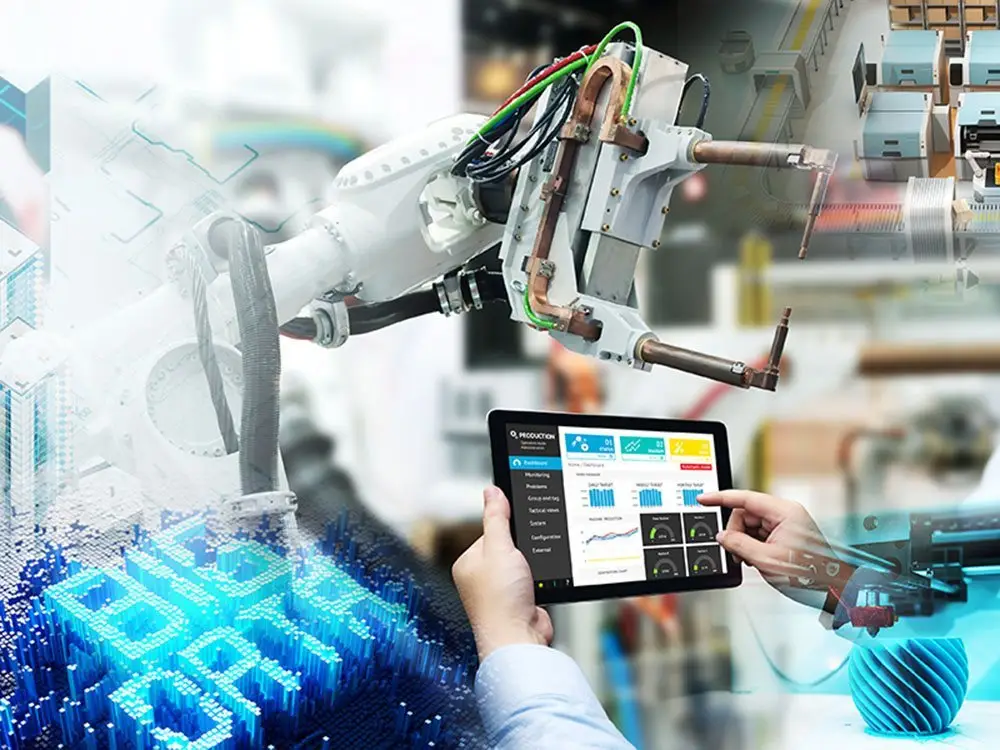
Applications of the 4IR in Viet Nam are growing strongly across many fields:
- Manufacturing: Smart factories are gradually taking shape, using robots and IoT to monitor and optimise production lines, raising productivity and product quality.
- Agriculture: IoT applications in smart farming, crop and livestock monitoring, and automated irrigation control.
- Healthcare: AI applications in diagnostic imaging, electronic medical records management, surgical assistance robots and remote health consultation systems.
- Transport: Development of intelligent transport systems, Big Data applications in traffic flow management, and ride-hailing apps.
- E-commerce and services: E-commerce platforms are growing strongly, using AI to personalise customer experiences and Big Data to analyse user behaviour.
- Education: Online learning platforms, AI applications to personalise learning paths, and VR/AR for practical simulations.
Centre for the Fourth Industrial Revolution Ho Chi Minh City (HCMC C4IR)
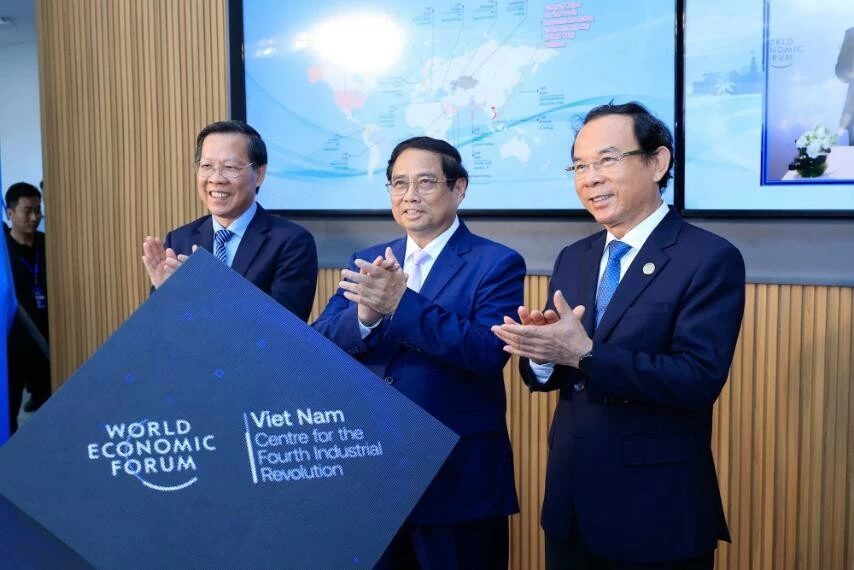
Amid globalisation and the rapid development of the 4IR, Ho Chi Minh City took the lead in establishing the Centre for the Fourth Industrial Revolution Ho Chi Minh City (HCMC C4IR). The Centre was officially inaugurated and launched on 25 September 2024, headquartered at the Saigon Hi-Tech Park in Thu Duc City. HCMC C4IR is the second centre established in Southeast Asia (after Malaysia) and the 19th worldwide, reflecting Ho Chi Minh City’s leading role and vision in technology and innovation.
Role and mission of HCMC C4IR:
- Policy advice and development: A hub for research and consultation on breakthrough policy packages for Ho Chi Minh City, shaping the development path of the green economy, digital economy and circular economy on the foundation of 4.0 technologies.
- Mobilising and connecting resources: HCMC C4IR is a bridge between domestic and international resources (government, businesses, research institutes, universities, investment funds) to promote the application of advanced technologies. The Centre operates under a public-private partnership model, with the participation of major enterprises.
- Supporting businesses and local authorities: Providing advice and support for digital transformation and the application of technologies such as AI, smart manufacturing, the semiconductor industry and other smart technologies.
- Research and development: Promoting scientific research and technology development, especially in priority areas such as AI, smart manufacturing, digital transformation, semiconductor technology, the digital economy and green finance.
- Training and capacity building: Coordinating the design and delivery of training programmes on AI and other 4.0 technologies for civil servants, public employees and the community.
- International connection: Cooperating with other C4IR Centres around the world to learn from experience, share knowledge and advance joint projects.
Prime Minister Pham Minh Chinh placed his trust and expectations in HCMC C4IR with 20 words: “Pioneering, cooperation, connection, digitalisation, greening, practical, effective, spreading, for the nation, for the people”. This clearly reflects the importance of HCMC C4IR in shaping the technological and economic future of Ho Chi Minh City in particular and Viet Nam in general.