WEF Davos: The Annual Meeting of the World Economic Forum
"Davos" is not merely the name of a picturesque resort town nestled in the Swiss Alps; it has long stood as a symbol of global economic power, intellect, and cooperation. When people speak of Davos, they refer to the Annual Meeting of the World Economic Forum (WEF)—one of the planet's most significant diplomatic and economic events, where decisions and ideas can shape the future for billions.

Founded in 1971 by Professor Klaus Schwab, the WEF was originally named the European Management Forum, with the goal of helping European companies access modern American management methods. Over five decades, it has evolved into a prestigious international organization where stakeholders—from governments and businesses to civil society organizations—convene to solve shared problems under the "Davos Spirit" (direct, informal, and interdisciplinary interaction).
The WEF Davos Conference plays an irreplaceable role as an "incubator" for global initiatives, ranging from trade agreements to large-scale environmental protection commitments.
The year 2025 marked the 55th edition of this Conference, taking place from January 20 to 24, 2025, in Davos, Switzerland. With the overarching theme "Collaboration for the Intelligent Age," the Conference focused on finding shared solutions to harness the power of breakthrough technologies while addressing systemic risks arising from geopolitical fragmentation and climate change.
WEF Davos 2025 gathered nearly 3,000 delegates from over 130 countries, including approximately 350 government leaders and over 1,600 top global business executives. Notably, the Conference took place against a backdrop of significant global policy shifts, particularly the change in administration in the United States, creating a vibrant atmosphere for discussions on the future of free trade and technology regulations.
Vietnam – WEF: From Integration to Global Contribution
Vietnam officially established relations with the World Economic Forum in 1989, marking the beginning of its participation in a dialogue network with global economic leaders as the country embarked on its Doi Moi (Renovation) era. Vietnam has attended the WEF Davos Conference at the Prime Ministerial level multiple times, with the first attendance by a Vietnamese Prime Minister in 2007. In 2024, Prime Minister Pham Minh Chinh attended and delivered a policy speech at a main dialogue session, marking a significant step in national policy dialogue with the global community.
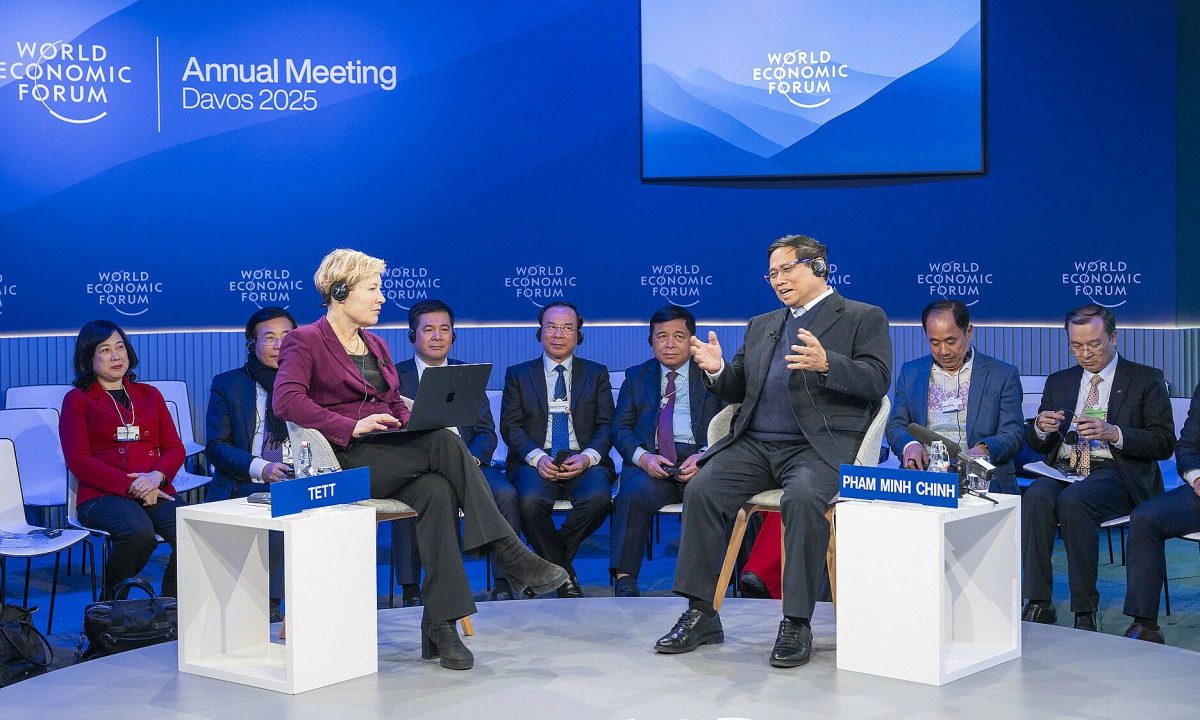
In 2025, Vietnam continued to affirm its position as an economic "bright spot" at the 55th WEF Davos Conference. Prime Minister Pham Minh Chinh continued to attend and speak at key discussion sessions, including strategic dialogues specifically designed for Vietnam.
Prime Minister Pham Minh Chinh presented socio-economic development solutions and policies within the context of the "Intelligent Age," emphasizing directions for attracting investment, expanding export markets, sustainable growth, and facilitating the development of startups and priority industries. This presence and articulation helped spread Vietnam's strategic vision for international integration and promoted cooperation in investment, technology, and education-training with major economic partners worldwide.
On the sidelines of the conference, the Prime Minister and the Government delegation held important meetings with the WEF Executive Chairman and numerous leaders of major economies, making strides in promoting strategic partnerships. Vietnam was also recognized as an attractive destination for business development and international investment, contributing to elevating the nation's stature on the global forum. These commitments and messages established an important foundation for expanding cooperation in innovation, digital transformation, sustainable policy, and economic development in the near future.
HCMC C4IR: A Strategic Bridge Between Vietnam and WEF
In 2024, the Center for the Fourth Industrial Revolution in Ho Chi Minh City (HCMC C4IR) was established through cooperation between the Government of Vietnam and the World Economic Forum, marking a significant milestone in Vietnam's foreign affairs on the international stage.
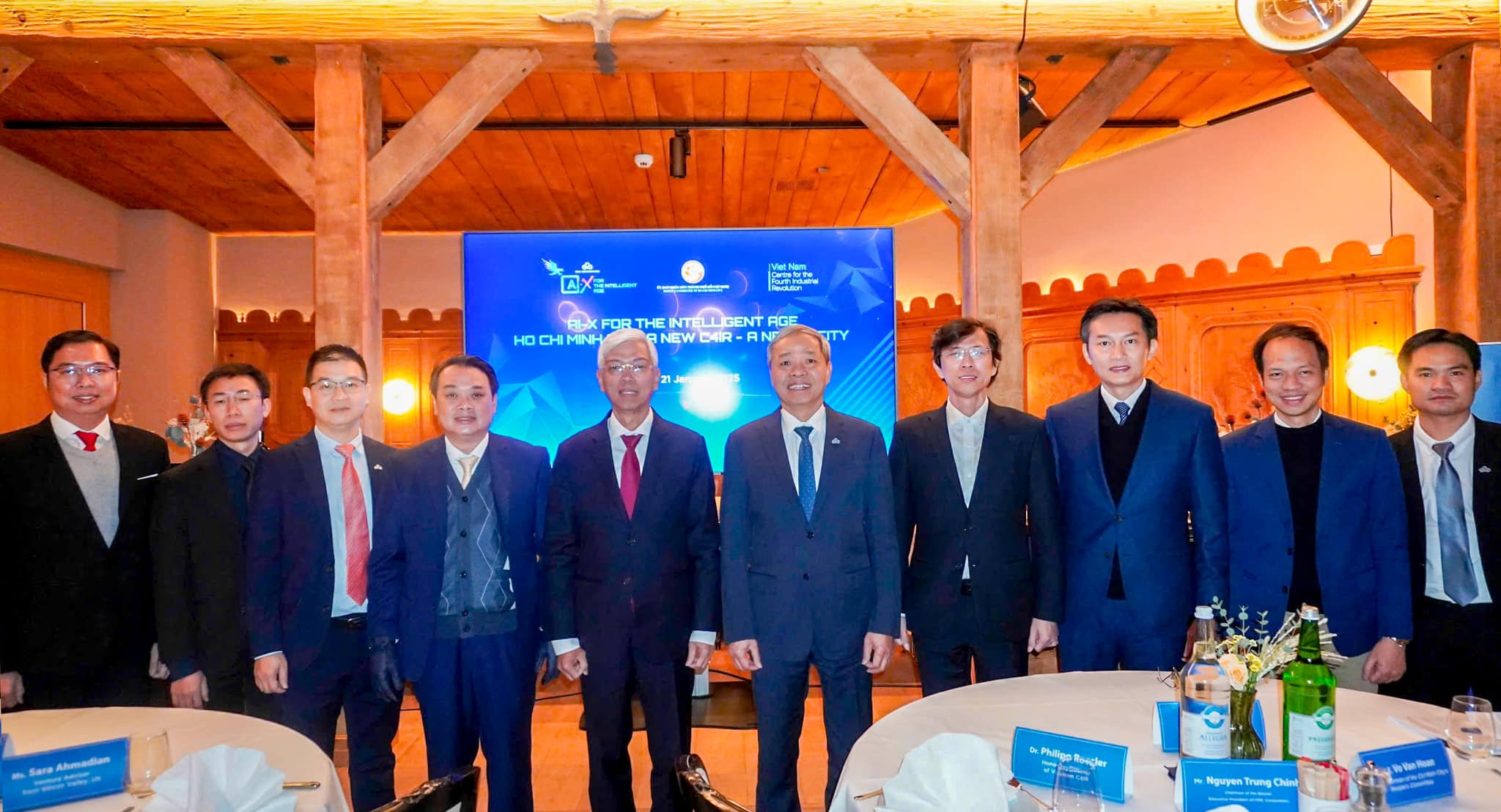
In January 2025, a delegation from Ho Chi Minh City, led by Mr. Vo Van Hoan, Vice Chairman of the City People's Committee, conducted a working visit to the Davos 55 Conference. For the first time, HCMC C4IR, in coordination with CMC Technology Group, presided over the organization of the Forum "AI-X for the Intelligent Age – HO CHI MINH CITY: A NEW C4IR & A NEW AI CITY."
The forum focused on promoting the cooperative relationship between Ho Chi Minh City and the WEF, introducing international partners to HCMC C4IR as well as opportunities for cooperation with the City in the fields of artificial intelligence, smart manufacturing, and the development of the Vietnam International Financial Center. Simultaneously, it served as an initiative to deploy the world's first AI City model in Ho Chi Minh City, affirming Vietnam's pioneering role in the digital technology sector.
"AI-X for the Intelligent Age – Ho Chi Minh City: A New C4IR – A New AI City," initiated by CMC Group, was presented to global businesses and investors.
The AI-X Forum attracted over 100 international delegates, including representatives from C4IR centers of other countries, along with many major technology corporations from Vietnam and the world. Notably, at this event, Mr. Vo Van Hoan, Vice Chairman of the HCMC People's Committee, on behalf of the City's leadership, presented the Decision inviting Dr. Philipp Rösler, former Vice Chancellor of Germany and former Managing Director of the WEF, to serve as the Honorary Director of HCMC C4IR.
In a meeting with Dr. Philipp Rösler immediately following the Forum, the Vice Chairman expressed strong commitments to the mission of making HCMC C4IR an outstanding member of the WEF's C4IR network. For his part, Dr. Rösler affirmed that he would frequently visit and work in the City, contributing his experience and utilizing his network to promote the City, while recommending that the City focus on developing a C4IR with a "distinctly Vietnamese identity."
HCMC C4IR at WEF Davos 2026: Continuing the Journey of Global Positioning
Building on the past year's journey, HCMC C4IR continues to take deep, sequential steps in the process of integration and international positioning for Ho Chi Minh City at the WEF Davos 2026 Conference. The presence of HCMC C4IR at this Conference not only demonstrates its role as a bridge between the City, the World Economic Forum, and global partners but also reflects a proactive effort to participate in strategic discussions on innovation, technology, finance, and sustainable development.
HCMC C4IR enters WEF Davos 2026 with a proactive mindset, accompanying the WEF and global partners in creating breakthrough initiatives for the Intelligent Age. Through a series of networking, dialogue, and vision-promoting activities, HCMC C4IR aspires to spread the message of a dynamic, creative Ho Chi Minh City that is ready to cooperate and contribute globally, thereby affirming the City's increasingly clear position in the international innovation ecosystem.
Viet Nam C4IR