A Mission to Accompany the Nation
On March 4, 1959, the State Science Committee, the predecessor organization of the Ministry of Science and Technology (MST), was established by Decree No. 016-SL of the President of the Democratic Republic of Vietnam. The Committee's birth was a testament to the strategic vision of our Party and State regarding the driving role of science and technology, even as the country faced countless difficulties and hardships.
From its inception, the State Science Committee defined its mission as serving three national goals: production, civil life, and national defense. In an era when its science and engineering were still in their infancy, the State Science Committee successfully completed many urgent tasks while building the fundamental foundations for science and technology. The nation always remembers the contributions of scientists and managers such as Tran Dai Nghia, Ho Dac Di, Ton That Tung, Ta Quang Buu, Luong Dinh Cua, Bui Huy Dap, and the silent contributions of the first generation of scientific cadres.

After reunification, the nation's science and technology forces, together with the entire populace, strove to heal the wounds of war and to restore and develop the economy while under embargo and sanction. This period continued to test the will and research enthusiasm of Vietnamese scientific cadres.
With intellect, determination, and a spirit of self-reliance, Vietnam's science and engineering forces rose up strongly. It was during these difficult years that Vietnam's "projects of the century" were built, such as the Hoa Binh Hydropower Plant and the 500kV North-South transmission line, with the design and construction participation of our scientific and technical cadres.
Step by step, Vietnam's science and technology forces continuously learned and matured, actively participating in the Doi Moi (Renewal) process initiated by our Party, abolishing the subsidized bureaucracy, building a socialist-oriented market economy, and expanding international cooperation and exchange.
Those were truly extraordinary efforts under the harshest historical circumstances. They are lessons in how science and technology must execute their mission to shoulder the common destiny of the nation. This truly inspires today's generations on the path of developing science and technology to serve the goals of a prosperous people, a strong country, and a democratic, equitable, and civilized society.
Impulse and Breakthroughs for the Future
Nearly sixty-six years later, on December 22, 2024, General Secretary To Lam signed and issued Resolution No. 57-NQ/TW of the Political Bureau on breakthrough development in science, technology, innovation, and national digital transformation. It affirms that the development of science, technology, innovation, and digital transformation is now the decisive factor in national development; it is the prerequisite and the best opportunity for our country to develop richly, strongly, and powerfully in this new era—an era of the Nation's ascendance.
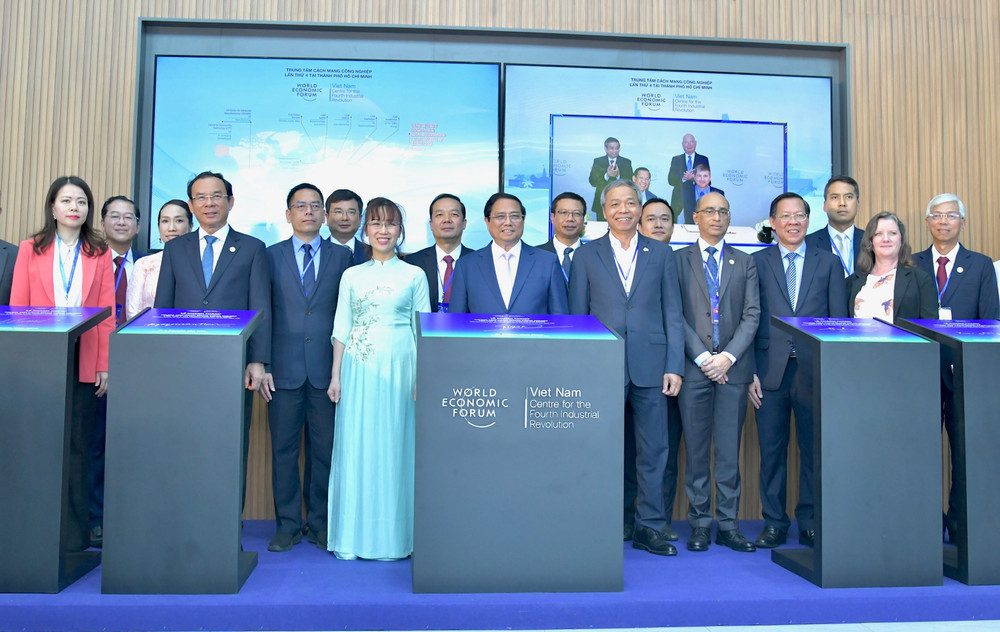
Also in the latter half of 2024, the Centre for the Fourth Industrial Revolution in Ho Chi Minh City (HCMC C4IR), part of the global network of the World Economic Forum (WEF), was established. Prime Minister Pham Minh Chinh highlighted six key significances of the Centre's establishment. Among them, it "concretizes and implements the Party's guidelines and policies on science, technology, and innovation, and the application of the achievements of the 4th Industrial Revolution; accelerates industrialization and modernization in line with the Resolution of the 13th Party Congress and resolutions of the Central Committee; meets the objective demands of reality in national development; and contributes to deep integration in the field of science, technology, and innovation, participating in the Fourth Industrial Revolution."
Entering the historic year 2025, we celebrate the 80th anniversary of the successful August Revolution and the National Day of the Socialist Republic of Vietnam. This year is considered particularly important—a year of acceleration, breakthroughs, and "crossing the finish line" to strive for the highest possible results on the goals and targets of the 5-year Socio-Economic Development Plan (2021-2025). Vietnam is actively participating in the Fourth Industrial Revolution, promoting digital transformation in all areas. Science-technology, innovation, and digital transformation have become critical, decisive factors for the country's rapid and sustainable development, making practical, comprehensive contributions in every field, such as health, agriculture, industry, information technology, and national defense and security.
The application of science, technology, and innovation is considered the main driving force for economic growth in the new era, aimed at successfully achieving the two 100-year goals set by the 13th National Party Congress. Specifically, by 2030, the 100th anniversary of the Party's founding: To be a developing, socialist-oriented country with modern industry and high-middle income. By 2045, the 100th anniversary of the founding of the Democratic Republic of Vietnam, now the Socialist Republic of Vietnam: To become a developed, socialist-oriented, high-income country.
Viet Nam C4IR